


Over 80% of Americans will experience back pain at some point in their lives. This statistic means that millions of people are actively looking for help, which means there is a huge potential patient population for successful, non-surgical treatments. However, despite this demand, many pain treatment clinics and chiropractors find it difficult to reach the people who need their assistance. They have the tools and the expertise, but their calendars are still somewhat open.
The outreach strategy is often the cause of the disconnect rather than the standard of care. At Webugol, we specialize in bridging this gap. As a healthcare-focused digital marketing agency, we have transformed patient acquisition through targeted spinal decompression marketing for dozens of practices. We understand that promoting niche therapies requires a different approach than general chiropractic advertising.
Today, we will share strategies we use to get qualified leads, teach potential patients, and fill their decompression tables.
What is Spinal Decompression Marketing?
Spinal decompression therapy marketing is a unique type of healthcare marketing meant to attract people with chronic back and neck pain who want non-invasive surgery options. Decompression marketing targets a more urgent, high-stakes need than conventional chiropractic marketing, which often focuses on acute pain or wellness maintenance.
An effective spinal decompression marketing must educate, create trust, and make the time and money spent worthwhile. To get targeted traffic, you need a strategy that speaks directly to the chronic pain sufferer’s specific fears and hopes.
Understanding Your Spinal Decompression Patient Avatar
You need to know exactly who you want to reach before you spend any money on ads. The typical spinal decompression patient is not just anyone with a stiff back.
The Emotional and Practical Pain Points
Because they can no longer pick up their grandchildren, play golf, or get a good night’s sleep, these people often feel depressed. Your spinal decompression marketing needs to back up these feelings. You offer more than just “pain relief”; you also restore their lifestyle without putting them at risk for invasive procedures.
Demographics and Psychographics
Your ideal patient is usually between the ages of 40 and 65. They may have a higher disposable income or good insurance coverage, which is necessary for the typical cost of decompression therapy.
Digital Marketing Strategies for Spinal Decompression
You need a multi-channel spinal decompression marketing strategy that attracts high-intent searchers and nurtures those who are just starting their investigation if you want to dominate your local market. At Webugol, we recommend a mix of SEO, PPC, and Social Media to create a holistic ecosystem.
Search Engine Optimization (SEO)
The long-term equity you have is SEO. It guarantees that your clinic will respond to questions about back pain from people in your area.
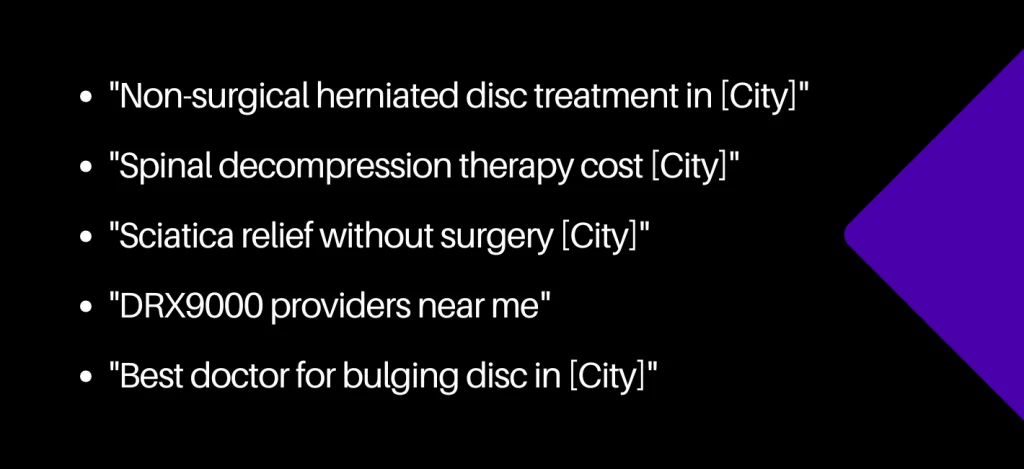
Long-Tail Keyword Strategy for Spinal Decompression Marketing Campaigns
It’s too competitive and too broad to only focus on “chiropractor.” Rather, focus on high-intent, niche long-tail keywords. Examples:
On-Page Optimization Checklist
- Dedicated Service Pages: Make a separate, long page (over 1,000 words) just for spinal decompression.
- Meta Tags: Make sure your Title Tag includes “Spinal Decompression” and your city name.
- Schema Markup: Use the MedicalWebPage schema to help Google understand your content is health-related and authoritative.
- Speed and Mobile: Your website needs to be completely responsive to mobile devices and load in less than three seconds.
Spinal Decompression Marketing Near Me: Local SEO Tactics
Make sure your main category is right (Chiropractor or Pain Control Clinic) and include “Spinal Decompression” as a specific service product. Ask for reviews that mention the specific treatment.
Pay-Per-Click (PPC) Advertising
Budgeting for Success
Start your daily budget of $50–$100 for a typical market. This usually gives you enough time to collect data to improve the campaign in the first month.
Spinal Decompression Marketing: Landing Page Essentials
Don’t ever send paid traffic to your homepage. Send them to a dedicated landing page that minimizes navigation distractions. The page needs:
- A clear, bold headline matching the ad.
- A video of the doctor explaining the procedure.
- Social proof (testimonials).
- A clear call to action (phone number and form).
Social Media Marketing
You can create relationships and brand recognition on social media. It allows you to interrupt the scroll of potential patients who may not be actively searching but are living in pain.
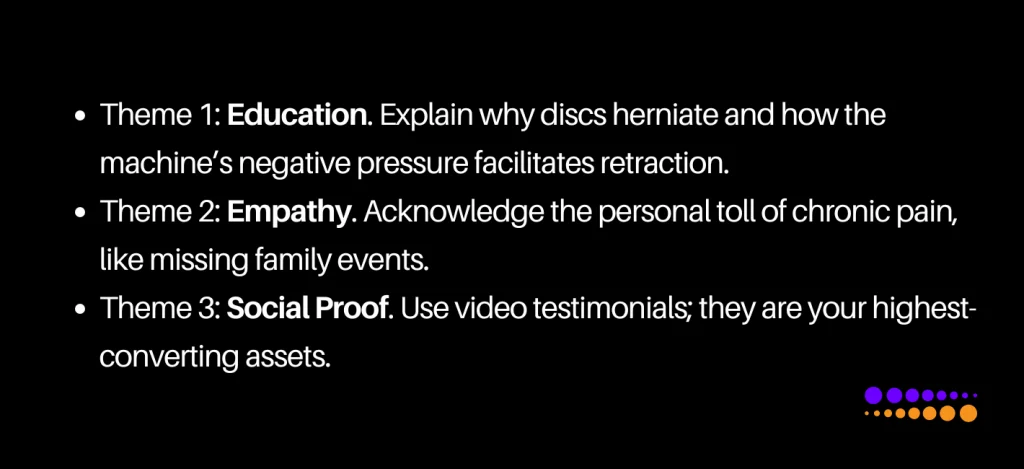
Themes Content and Engagement
Post frequency should be consistent – aim for 3-4 times per week.
Content Marketing for Spinal Decompression Practices
Content is the fuel that keeps your spinal decompression marketing engine running. It makes you the expert and nurtures leads who aren’t ready to book right away.
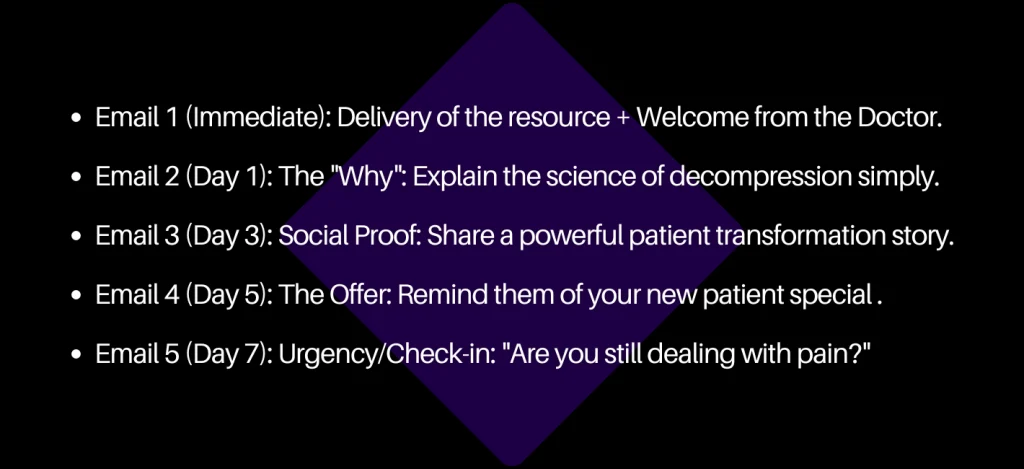
Email Sequence Structure
You must nurture leads after you have them. A 5-email sequence works best:
Measuring and Tracking Your Spinal Decompression Marketing Success
Key Performance Indicators (KPIs)
- Cost Per Lead (CPL): The total amount spent on ads divided by the number of requests.
- Conversion Rate: The proportion of visitors to landing pages who convert to leads.
- Show Rate: The percentage of booked appointments that actually show up. If this is below 70%, your follow-up process needs work.
- Cost Per Acquisition (CPA): Total cost divided by the number of paying patients.
Recommended Tools
- Google Analytics 4 (GA4)
- CallRail
- CRM (e.g., GoHighLevel or specialized chiropractic software)
Compliance and Ethical Considerations
Spinal decompression marketing is highly restricted. If you break these restrictions, you could get big fines that could damage your reputation.
HIPAA Compliance
Any marketing that uses patient data (like email marketing or retargeting lists) must be HIPAA compliant. Never share patient names or identifying details in public responses to reviews or social media posts without explicit, written consent. Ensure your CRM and email tools sign a Business Associate Agreement (BAA).
FTC Guidelines and “Truth in Advertising”
The Federal Trade Commission requires that all health claims be supported by competent and reliable scientific evidence.
- Avoid Guarantees: Never promise a “cure” or “100% success.” Use language like “may help relief” or “proven to reduce pain in many patients.”
- Best Practice: The best practice is always to have your spinal decompression marketing assets reviewed by legal counsel familiar with healthcare regulations in your specific state, as state boards often have stricter rules than federal guidelines.
- Disclose Material Connections: If you are paying an influencer or a patient for a testimonial, this must be disclosed.
Conclusion: Taking Control of Your Practice Growth
To market spinal decompression well, you don’t need to use tricks or pushy sales approaches. It’s about awareness, empathy, and education. It is about giving someone who has been in pain for years a real, non-surgical reason to hope for the future.
You can create a steady flow of new patients by knowing your patient avatar, putting a strong digital strategy – including paid advertisements and SEO – into practice, and monitoring your progress. Success is not only possible; it is necessary for the present practice.
If you are ready to stop guessing and start growing, Webugol Agency is here to help. We understand the nuances of spinal decompression marketing because we live and breathe healthcare digital strategy every day.
Contact Webugol today for a free digital marketing audit of your practice. Let’s identify your missed opportunities and build a roadmap to dominate your local market.