


Nutrition Marketing 2025: Strategies by Webugol
Consumers want functional benefits and proof. Regulators want substantiation. Here’s how to win both in 2025.
Food marketing has changed a lot. Simple “all-natural” food labels or celebrity endorsement no longer convert. Today’s customers want clear information, scientific support, and solutions that are tailored to their unique health goals.
At the same time, regulatory bodies worldwide, including the World Health Organization, are tightening their grip on health claims.
This creates a unique challenge: how do you approach nutrition marketing for functional products that satisfy both consumer expectations and regulatory standards? Nutrition services that are adept at using evidence-based food marketing and provide the individualized, useful experiences that customers want will be the ones that win.
The 2025 Consumer: What They Want (and Click)
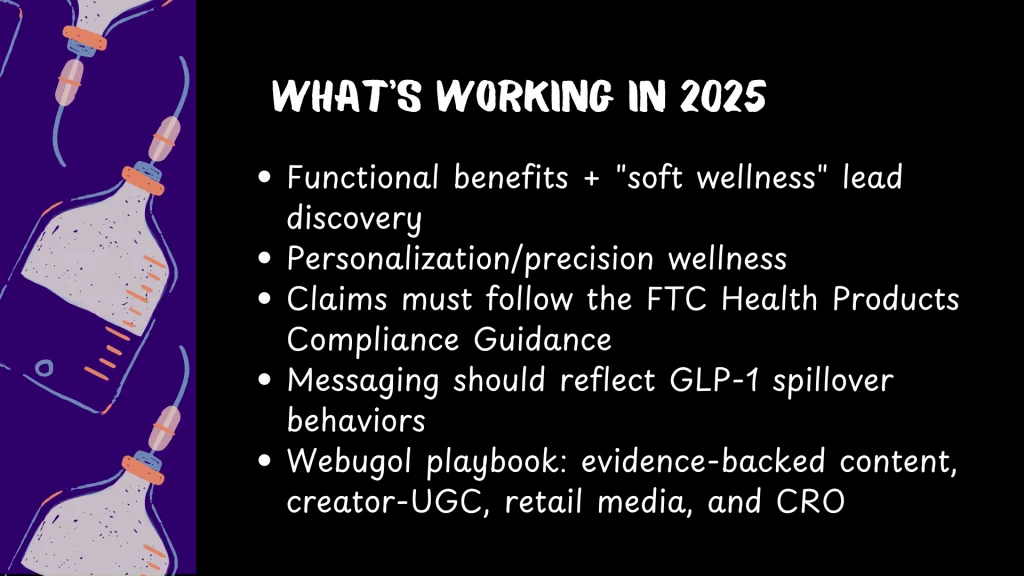
Consumer behavior in nutrition marketing has evolved beyond basic supplementation. Targeted, useful solutions that easily fit into daily routines are what the modern wellness consumer looks for.
Ready-to-drink formats dominate purchase decisions. Whether it’s energy drinks for productivity in the afternoon or non-alcoholic mood drinks for social settings, consumers value ease without sacrificing effectiveness. Shot-sized functional drinks and single-serve powders are riding the “snackification” wave into beverages.
Functional Convenience Takes Center Stage
Due to demands for productivity and job stress, mood and concentration support items are the category with the highest rate of growth. Immune support remains strong, particularly among consumers who view prevention as more cost-effective than treatment.
The Precision Wellness Movement
A personalized dietary nutrition marketing strategy is no longer considered a luxury. Consumers expect a nutrition business to understand their unique needs, whether based on age, lifestyle, or health goals.
The precision wellness trend also influences product creation. Instead of generic formulations, nutrition professionals are tailoring them to specific use cases.
GLP-1 Spillover Effects
The popularity of GLP-1 medications has created behavioral changes that extend far beyond prescription users. More and more, people want protein snacks in smaller amounts, value fullness above volume, and look for items that help them regulate their portions.
Brands that can adapt to this behavioral shift without making medical claims or promoting prescription medications have food marketing potential.
Messaging That Converts (Without Over-claiming)
Nutrition marketing must present compelling benefits and comply with regulations. Instead of making general health claims, the most effective nutrition professionals concentrate on how their products fit into their customers’ everyday routines.
Benefits Anchored in Proof
Replace vague wellness claims with specific, evidence-backed benefits.
Functional drinks messaging should emphasize:
- Specific ingredient amounts
- Timing of benefits (30 minutes for energy, every day for support)
- Evidence sources (clinical studies, published research)
- Limitations and restrictions
Format-First Copy Strategy
People buy convenience as much as benefits. Post-workout recovery, pre-presentation focus, and end-of-day wind-down are ideal occasions for mood-support beverages.
Based on data from a nutrition digital marketing agency, marketers can tailor their messaging to these situations to increase conversions.
Precision Wellness Messaging
Use consumer groups to segment messaging instead of general demographics. “Night shift energy support” resonates more with targeted audiences than “energy supplement”. Wellness products work best when they take into account certain lifestyle problems.
Nutritional Benefits Communication
Provide context for nutrition. Give examples of how different nutrients complement one another rather than enumerating them separately.
Channel Strategy 2025
Successful nutrition marketing needs coordinated efforts across numerous channels serving certain funnel stages with consistent messaging.
Upper Funnel: Creator-Driven Discovery
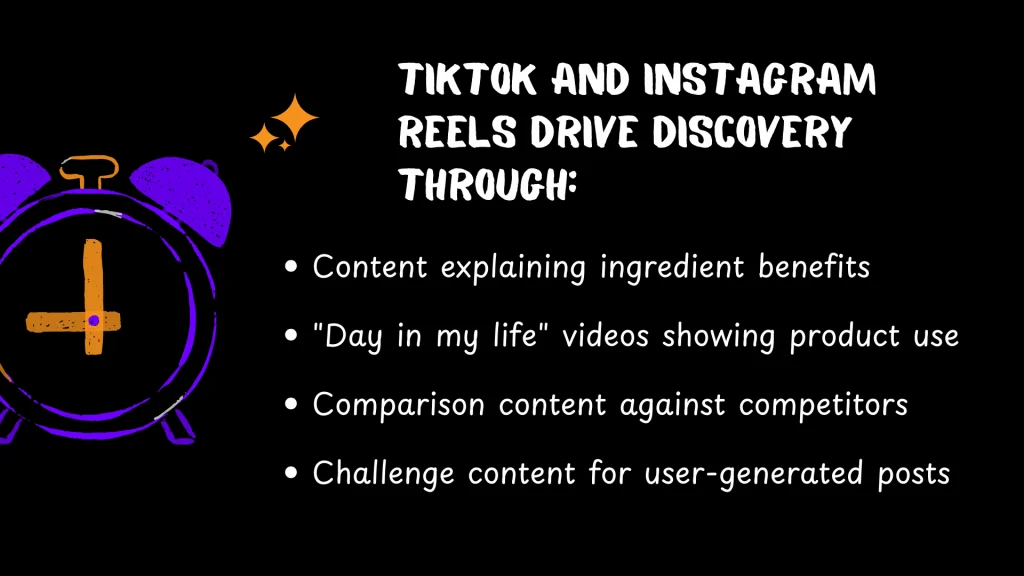
Authentic creator content is essential to the success of functional beverage companies’ marketing. Partner with micro-influencers on social media platforms who love your products and can personally attest to their benefits.
Mid-Funnel: SEO-Optimized Education
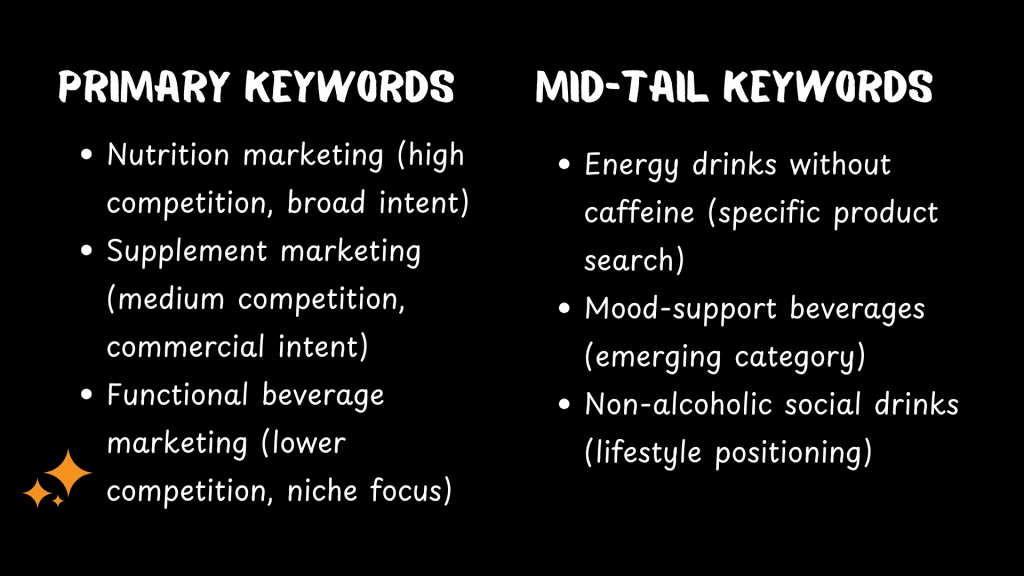
Benefit clusters should be the focus of nutrition search engine optimization content rather than specific product pages. Organically include product suggestions in energy, focus, gut health, and recovery guidance.
Users looking into certain compounds find ingredient education pages to be effective. Detailed adaptogen, nootropic, and functional ingredient monographs attract high-intent search traffic.
Nutrition marketing channels should include:
- Benefit-focused blog content
- Ingredient and nutrition education hubs
- Comparison guides (natural vs. synthetic, different delivery methods)
- Expert interviews with registered dietitians
Lower Funnel: Personalized Conversion
To provide product recommendations based on browsing patterns, past purchases, and expressed preferences, email marketing and SMS marketing require the use of behavioral data. Subscription offerings operate best as convenience, not savings.
Using first-party data allows for more complex segmentation:
- New customers receive education-focused content
- Repeat customers get product recommendations and usage tips
- Lapsed customers receive win-back offers with new product samples
Site Architecture & On-Page SEO
Effective SEO nutrition marketing requires careful attention to site structure and on-page optimization that supports both user experience and search engine visibility.
Hub Page Strategy
Create topic clusters around major benefit categories:
- Energy and focus hub
- Recovery and sleep hub
- Digestive health hub
- Immune support hub
Each hub should include:
- Comprehensive overview of the category
- Links to specific product pages
- Educational content about relevant ingredients
- Expert-authored articles on related topics
On-Page Optimization Framework
Nutrition marketing plan pages should always use the same optimization patterns:
- H1 tags should include primary keywords naturally
- H2 subheadings should target related long-tail keywords
- Meta descriptions should emphasize benefits and proof points
- Schema markup should include product reviews, nutritional information, and organization details
Conversion Optimization for Nutrition Websites
To ensure nutrition marketing effectiveness, product pages need to address common purchase objections:
- Detailed ingredient panels with amounts
- Third-party testing certificates
- Usage instructions and timing recommendations
- Potential side effects or contraindications
- Money-back guarantees and return policies
Keyword Plan
To use strategic keyword targeting, you need to know how customers go from being aware of a product to making a purchase decision.
Conversion Framework & Analytics
Nutrition marketing conversion rate optimization involves sophisticated testing and assessment strategies that account for lengthier consideration periods and complex purchasing motivations.
Testing Framework
Testing nutrition products involves comprehensive, creative, and messaging optimization:
A/B Testing Priorities:
- Flavor-first vs. benefit-first product positioning
- Scientific evidence placement and format
- Subscription vs. one-time purchase messaging
- Price anchoring and value proposition emphasis
Multivariate Testing Opportunities:
- Product page layouts with different evidence presentations
- Email subject lines balancing benefits and proof points
- Landing page structures for different traffic sources
- Mobile vs. desktop conversion path optimization
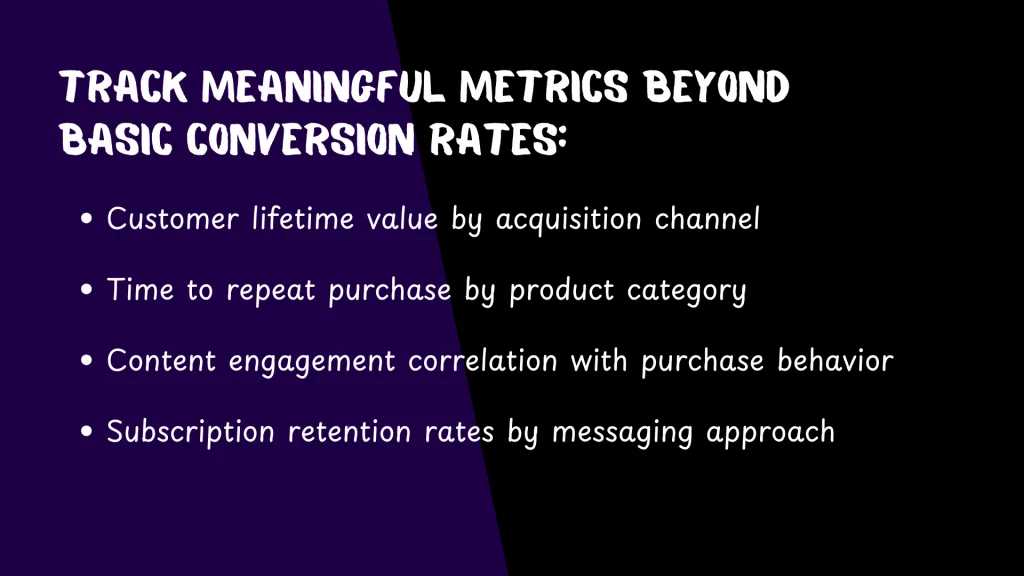
First-Party Data Strategy
First-party data for nutrition marketing lets you segment and personalize your audience with exceptional accuracy:
- Purchase history analysis for cross-selling opportunities
- Email engagement patterns for content preferences
- Website behavior data for product recommendation engines
- Survey responses for psychographic segmentation
Conclusion
As rules get stricter and people’s expectations change, the nutrition marketing landscape will only get more complicated. Successful brands strike a mix between appealing marketing and strict compliance.
Webugol’s evidence-led approach has helped nutrition practices navigate these challenges while driving sustainable growth. We ensure your marketing strategy meets consumer and regulatory standards with our systematic approach.
Schedule a strategy session with Webugol to audit your current marketing approach, claims substantiation, and content strategy. We’ll identify compliance risks, optimization opportunities, and growth levers specific to your brand and category.
Don’t wait for competition or regulatory action to force changes. Get ahead of the curve with a nutrition marketing strategy built for 2025 and beyond.