


Push vs Pull Marketing: Key Differences and When to Use Each
When you’re attempting to build your business, marketing can seem like too much. Should you target customers or develop content that attracts them? The answer is to know the difference between push vs pull marketing. These are two basic strategies that can make or break your marketing.
Push marketing involves directly promoting your products or services to consumers, whereas pull marketing involves generating outstanding content and experiences that organically attract customers. Although each method has a role in effective marketing efforts, understanding when to use each one can help you save time, money, and effort.
Understanding these two marketing methods will help you allocate your marketing budget and efforts when introducing a new product, creating brand awareness, or cultivating long-term customer connections.
The Difference Between Pull vs Push Marketing Strategies
What is Push Marketing?
Businesses use push marketing, a direct strategy, to actively offer their goods and services to customers. Think of it as “pushing” your message to potential customers, whether they want it or not. The goal is to create immediate awareness and drive quick sales.
Common push marketing examples include:
- Billboard and print ads
- Direct mail campaigns
- Email marketing blasts
- Cold calling and door-to-door sales
- Trade show exhibitions
- Sponsored social media posts

Push vs Pull Marketing: Benefits of Push Marketing
Push marketing produces outcomes fast. It is great for companies with time-sensitive offerings or outcomes.
You have total control over the timing and content of your message thanks to this method. Choose what to say, when, and who sees it. Because of this degree of control, push marketing strategy works especially well for new product launches and seasonal promotions.
Drawbacks of Push Marketing
The main challenge with push marketing is cost. It can be costly to use traditional advertising channels like print, radio, and television, particularly for small businesses with limited budgets.
Push marketing can also cause ad fatigue. Too many promotions make people tune out or reject your brand. This is why many consumers use ad blockers or skip commercials whenever possible.
The main difference between push vs pull strategy marketing is how a message is delivered to the target audience. For quick sales and launch publicity, push marketing promotes products or services through commercials, promotions, or retail channels. On the other hand, pull marketing uses strategies like social media, content marketing, and SEO, along with valuable material and brand loyalty, to draw clients.
What is Pull Marketing?
Pull marketing creates valuable content and experiences that naturally attract customers. Pull marketing engages individuals with useful information, entertainment, or solutions rather than advertising.
The goal of this approach is to gradually establish relationships and trust. Provide value consistently to establish your brand as an authority and build a dedicated audience that engages with your material.
Common pull marketing examples include:
- Search engine optimization
- Content marketing (blogs, videos, podcasts)
- Social media engagement
- Webinars and educational resources
- Customer reviews and testimonials
- Influencer partnerships
- Free tools and resources
Push vs Pull Marketing: Benefits of Pull Marketing
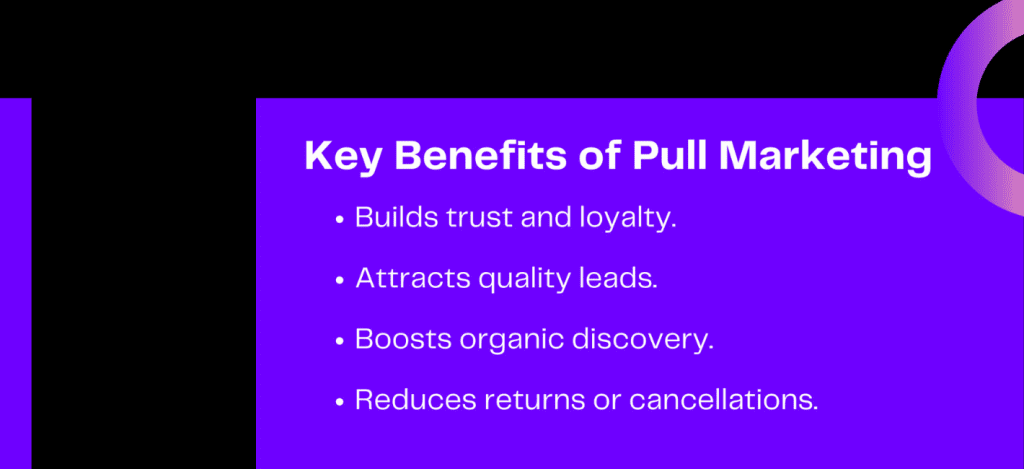
Relationships with customers are strengthened and sustained through pull marketing. Users who find your company through valuable content or recommendations are more willing to trust and buy.
Higher-quality leads are also typically drawn in by this strategy. Pull marketing attracts customers who are already interested in your products and services, making them more likely to buy.
Drawbacks of Pull Marketing
Patience is the most difficult aspect of pull marketing. Content marketing, SEO, and social media require months or years to build a following.
Additionally, pull marketing calls for expertise and constant work. Many business owners lack the time and skills to create valuable content, optimize for search engines, and maintain an active social media presence.
Push vs pull marketing strategy differences allow marketers to leverage the advantages of each approach for comprehensive business promotion.
When to Use Push Marketing
Push marketing focuses on generating immediate results, making it most effective when you need outcomes right away or want to swiftly reach a large audience.
- New product launches
- Seasonal promotions
- Mass market reach
- Established brands with budgets
Examples of effective push strategies include restaurants promoting new dishes, retail establishments advertising seasonal sales, and service providers providing short discounts.
Leveraging push vs pull marketing differences helps marketers create a more comprehensive and impactful marketing plan.
When to Use Pull Marketing
When you require long-term relationships, expertise, or clients actively seeking answers, pull marketing works best.
- Building brand authority: Pull marketing through speaking engagements, content production, and thought leadership helps construct credibility over time if you want to position your company as an authority in your industry.
- Complex or high-value products: The educational method of pull marketing benefits software, professional services, and expensive equipment that call for investigation and consideration.
- Niche markets: Pull marketing enables you to produce highly relevant content that speaks directly to the interests and concerns of targeted audiences with unique needs.
- Limited marketing budgets: Small businesses and startups often find pull marketing more affordable than traditional advertising, especially when they can create content in-house.
Examples of successful pull marketing include service providers producing informative video lessons, software companies providing free tools and resources, and consulting companies sharing industry insights via blogs.

Combining Pull vs Push Marketing
Marketing tactics that combine push and pull are the most effective. Rather than choosing one over the other, smart businesses use each strategy where it works best.
An integrated approach employs push marketing to build brand awareness and pull marketing to nurture connections and convert. To develop trust and help prospects through the purchasing process, a business may, for example, employ social media marketing (push) to promote its brand to new audiences and then offer insightful content (pull).
A successful mix is pull marketing to establish an audience and targeted push marketing to promote certain deals. Email newsletters with useful content also contain ads for related products and services.
Push vs Pull Marketing: Which is Right for Your Business?
Choosing between push and pull marketing depends on several key factors specific to your business situation.
- Consider your timeline: If you require results in weeks or months, try push marketing. If you can invest in long-term growth over 6-12 months or longer, pull marketing often provides better return on investment.
- Review your budget. While pull marketing spreads costs over time, push marketing requires bigger upfront inputs. When making decisions, consider your budget and cash flow.
- Assess your expertise: Pull marketing calls for social media expertise, SEO expertise, and content production. If you don’t have these capabilities in-house, push marketing might be more practical, or you might need to invest in training or outside help.
- Know your audience: Pull marketing works best for B2B and high-consideration purchases, whereas push marketing works best for consumer items and impulse purchases.
- Define your goals: Push marketing is preferred for brand visibility and quick sales, but pull marketing is more appropriate for lead development and fostering client loyalty.
Most successful companies start with whichever strategy best fits their requirements and resources, then add the other as they grow.
Making Your Marketing Strategy Work
Push vs pull marketing helps you make more efficient marketing decisions. Pull marketing generates more quality leads and creates lasting partnerships, whereas push marketing yields rapid results and a wide audience.
Matching strategy to corporate goals, timing, and resources is crucial. Choose the strategy that works best for you right now, and as you develop and change, think about how you may add aspects of the other approach.
Don’t worry about picking the “right” marketing strategy – just execute it regularly and measure results to improve.
Ready to create an integrated push vs pull marketing strategy? Contact Webugol Agency today to discuss how we can help you create campaigns that drive immediate results while building long-term growth for your business.