



Branded traffic explained: SEO impact and how to build it
Branded traffic is the share of your website visits that come from searches containing your brand name or a branded phrase. It is a direct measure of brand recognition online: not who could find you, but who was already looking for you. For marketing teams investing in awareness campaigns, it is the leading signal that spend is building something lasting. When brand search volume stays flat despite growing ad spend, that is the signal to fix the system before scaling the budget.
What is branded traffic in digital marketing?
In digital marketing, branded traffic is any website visit from a search that includes your business name, product name, or a branded modifier. The search "Apple support" is branded. The search "tech support" is not.
What is the difference between branded and non-branded traffic?
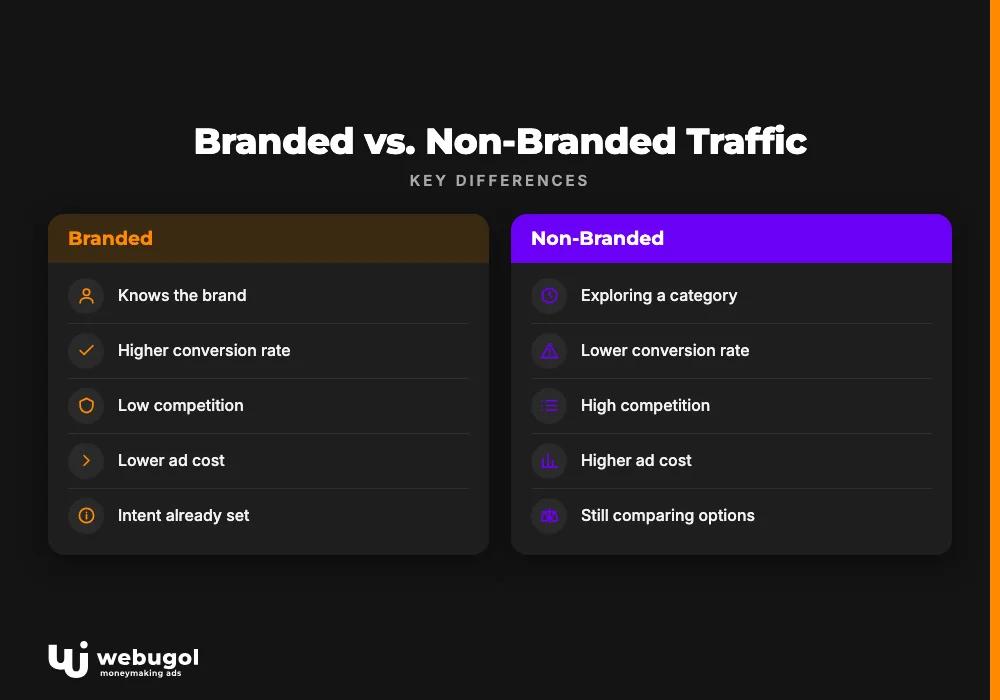
| Branded | Non-branded | |
|---|---|---|
| Search intent | Knows the brand, wants that brand | Exploring a category |
| Conversion rate | Higher, user is pre-sold | Lower, still comparing |
| Competition level | Low, only you rank for your name | High, the whole niche competes |
| Ad cost (CPC) | Lower | Higher |
When someone searches your name, they have already cleared awareness and consideration. That is why branded vs non-branded keywords diverge so sharply on conversion: the branded visitor arrives with intent already set.
The direct traffic vs organic distinction matters here. Direct traffic captures users who type your URL straight into a browser; branded organic traffic captures users who searched your name. Only the latter is measurable at the keyword level, which makes it the more actionable metric for brand tracking.
How does branded traffic affect SEO rankings?
Search engines read branded query volume as a trust signal for SEO authority. When a consistent share of your organic clicks comes from users searching your name, Google infers you are sought out rather than stumbled upon. This strengthens brand authority metrics, the engagement patterns that influence how you rank on related non-branded terms as well.
The click-through rate advantage is real. When someone types your brand name, your result appears first and they click it. That consistent engagement pattern reinforces ranking signals across your entire domain.
There is a longer payoff. As brand search volume grows, you reduce dependence on paid channels. You stop paying to re-acquire the audience that already knows you while paid campaigns focus on new audiences. Industry analyses consistently find that branded searches convert at higher rates than non-branded ones, even when the exact multiple varies by market.
How to increase branded search traffic?
These visits grow downstream from everything that works to increase brand visibility and build brand awareness SEO across channels. Three levers are consistently effective.
Consistent brand identity
A distinctive logo, a recognizable tone, and consistent visual patterns across every touchpoint (website, email, social profiles) give audiences something to retain. When a potential customer encounters your brand in three different contexts and sees the same identity each time, recall improves. That recall later shows up as branded searches.
Content that builds recall
Publishing content that solves real problems brings people back and ties your name to expertise they find useful. This is how brand awareness SEO compounds: content attracts non-branded traffic first, then converts a share of those readers into future branded searchers. The search comes later. But only if the first visit was worth remembering.
This shows up clearly in high-trust verticals. Take glp-1 marketing as an example: patients research GLP-1 treatments broadly, then search the specific clinic name before they call. The same pattern shapes semaglutide marketing strategy: brand recognition converts online research into booked appointments.
The gap between reading about a category and searching a specific provider's name is exactly where the opportunity either materializes or goes to a competitor.
Social media reach
Social platforms seed the branded searches that follow. Your name registers when someone sees your content on Instagram or LinkedIn. The search arrives later, sometimes weeks later. Regular presence on the platforms your audience uses is a steady driver of name-based searches over time.

How to measure branded traffic in Google Analytics?
To measure this in Google Analytics 4, connect your property to Google Search Console, which surfaces query-level search data. Filter for queries containing your brand name to isolate branded sessions from non-branded organic traffic.
For trend tracking and competitive benchmarking, SEMrush and Ahrefs let you segment keywords by branded versus non-branded and monitor brand search volume over time. Set up a branded keyword segment and track it as a share of total organic traffic each month.
The metric to watch is not raw branded visit count. It is branded share: the percentage of your organic sessions that arrive via name-based queries. A flat or declining branded share alongside growing ad spend signals that awareness is not converting to recall. That is the structural gap to address before scaling budget further.

Build a brand people search for by name
Webugol combines growth strategy with technical execution. If this channel is not growing alongside your marketing investment, we identify where recall is breaking down and address the causes: site performance, content architecture, and brand identity consistency.
FAQ
What is branded traffic in digital marketing?
Branded traffic refers to website visits from searches that contain your brand name, product name, or a branded phrase specific to your business. It measures how well brand recognition online has translated into deliberate search behavior. It is a direct signal that awareness has converted into recall.
How to increase branded search traffic?
Branded search traffic grows as a downstream result of brand awareness investment: a consistent creative identity, content that earns repeat visits, and social presence that plants your name in audiences' memories before they are ready to search. The goal is to leave a strong enough impression that your name surfaces when users have a relevant need.
What is the difference between branded and non-branded traffic?
Branded traffic comes from searches containing your business name or a unique branded phrase; non-branded traffic comes from generic category terms. Branded visitors typically convert at higher rates because they have already cleared awareness and consideration. Non-branded traffic is broader to reach and more expensive to acquire consistently.
How does branded traffic affect SEO rankings?
Branded query volume contributes to brand authority metrics that influence ranking across your entire domain, not just branded terms. Consistent branded click-through rates reinforce positive engagement patterns that search engines treat as quality signals. Strong name-based query volume tends to lift performance on related non-branded keywords over time.
How to measure branded traffic in Google Analytics?
Connect Google Analytics 4 to Google Search Console to access query-level data, then filter for branded terms. For historical trends and competitive benchmarking, SEMrush and Ahrefs provide branded versus non-branded segmentation with historical volume data over time. Track this as a percentage of total organic sessions to spot and close recall gaps.