



Gastroenterology marketing ideas that attract new patients
Effective gastroenterology marketing ideas combine local SEO, patient-focused content, paid advertising, and reputation management into a coordinated growth plan. Gastroenterologists compete in crowded local markets. Competition is fierce. Patients research providers online before booking, and the practice that ranks well, earns strong reviews, and communicates clearly will consistently win that comparison.
What are the best gastroenterology marketing ideas?
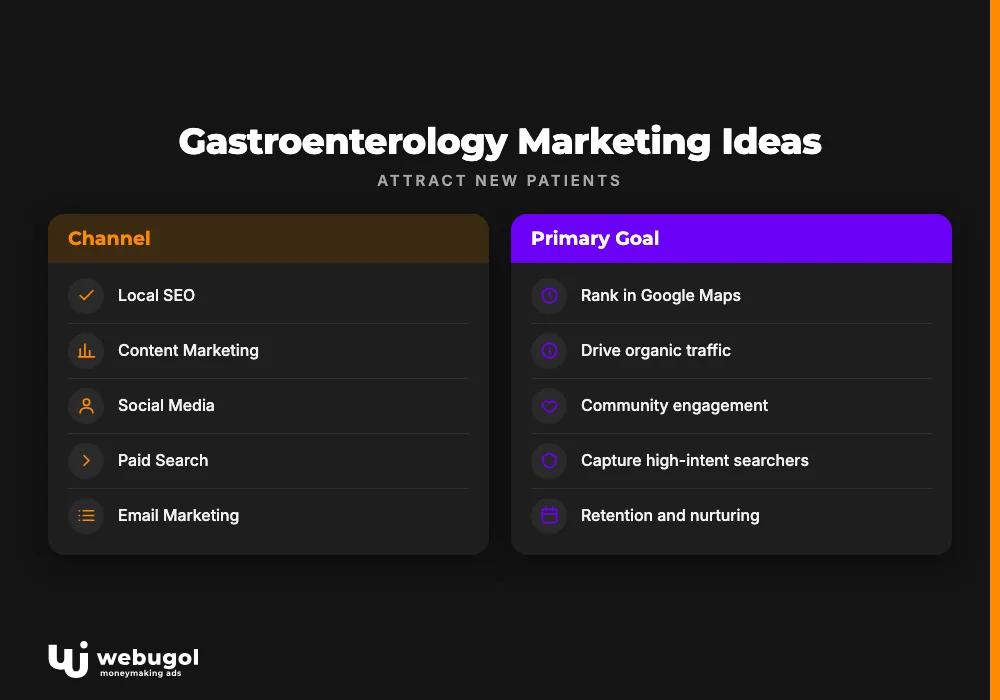
The most effective gastroenterology marketing ideas address the full patient journey, from the initial search to post-appointment follow-up. Before committing budget, map each channel against your acquisition and retention goals.
| Channel | Primary goal | Core tactic |
|---|---|---|
| Local SEO | Rank in Google Maps | Google Business Profile, Healthgrades citations |
| Content marketing | Drive organic traffic, build trust | Condition-specific blog posts |
| Social media | Community engagement and referrals | Educational video, digestive health infographics |
| Paid search | Capture high-intent searchers | Google Ads with procedure keywords |
| Email marketing | Retention and nurturing | Automated prep and follow-up sequences |
| Reputation management | Influence booking decisions | Post-appointment review requests |
Local SEO for gastroenterology
Local search optimization determines whether new patients find your practice or a competitor's. Practices with complete business listings and strong patient ratings rank higher in Google Maps. Your Google Business Profile is the most visible element of SEO for gastroenterology, displaying hours, contact details, and patient reviews that searchers check before calling.
Consistent citations across Healthgrades and Zocdoc strengthen local search authority beyond Google. Many patients choose a provider based entirely on map results. That changes everything. This local search optimization guide for gastroenterology practices covers the directories and signals that drive map pack visibility for medical offices.
Content marketing and blogging
Quality blog content answers patient questions before they walk through your door. Patients researching digestive conditions are motivated searchers. Intent runs high. When they find clear, accurate answers on your website, they are far more likely to book with you than with a practice they found through a generic directory listing.
Regular publishing improves organic rankings while educating prospective patients at the same time. Topics can span procedure preparation, dietary guidance, and symptom explanations, generating consistent value across every season.
Social media in gastroenterology digital marketing
Social platforms let practices share educational content and connect with their community. Instagram and Facebook work well for digestive health infographics and procedure explainers, while LinkedIn supports professional networking and generates specialist referrals.
Patient education videos about common procedures perform well across both channels. Video builds real trust. Sharing patient success stories, with explicit written consent, builds a recognizable practice identity without compromising privacy. For channel-specific strategies and compliance guidance, see this guide to social media marketing for gastroenterology practices.
Gastroenterology advertising: Google Ads and Meta Ads
Paid gastroenterology advertising captures patients who are actively searching for care. Google Ads target high-intent queries such as "colonoscopy near me" or "IBS specialist." Meta Ads reach patients earlier in the decision cycle through awareness and educational content.
Retargeting visitors who did not book an appointment keeps your practice visible during their research phase. Most practices miss this. Landing pages built for each specific campaign convert ad clicks into appointments at a higher rate than sending traffic to a generic homepage. Continuous A/B testing of ad copy and page layouts improves return on advertising spend over time.
Email marketing for patient retention
Email maintains relationships with current patients and guides prospects toward a first appointment. Newsletters can highlight new services, screening reminders, and health guidance relevant to your patient population.
Automated email campaigns for gastroenterology patients work best when segmented by procedure history or diagnosis. One sequence prepares patients for an upcoming procedure; another delivers follow-up care instructions after the visit. Personalized messaging raises both open rates and appointment adherence. Numbers do not lie.
How to get more patients as a gastroenterologist?
The most direct path to more patients combines local search visibility, strong online reviews, and active patient retention. Marketing for gastroenterologists produces compounding results when all three run simultaneously, because each effort reinforces the other two. Build them in parallel, not in sequence.
Website optimization
Your website underpins every gastroenterology online marketing channel. Fast load times matter. Mobile responsiveness matters just as much. Together they improve user experience and signal technical quality to search engines, which rank optimized sites higher in local results. Clear navigation and prominent scheduling options reduce friction for patients ready to book.
All healthcare websites must comply with HIPAA. Encrypted contact forms, clear privacy policies, and secure patient portals protect sensitive data and signal trustworthiness to new visitors.
Reputation management
Online reviews shape patient decisions before a single phone call is made. Reviews decide bookings. Proactive reputation management means asking satisfied patients to post reviews and responding professionally to all feedback, whether positive or negative. Google, Healthgrades, and Yelp each influence gastroenterology online marketing visibility.
Automated review-request systems, triggered after a successful appointment or a positive follow-up visit, generate a consistent flow of new reviews without adding manual tasks for staff. Handling critical feedback with care demonstrates genuine commitment to patient outcomes.
What does a gastroenterology marketing plan include?
A gastroenterology marketing plan documents the channel strategy, content calendar, advertising budgets, reputation monitoring schedule, and compliance requirements in one place. It defines which metrics indicate success and how frequently they are reviewed. A plan without measurement is simply spending. Track everything closely.
Marketing for gastroenterologists should produce traceable outcomes: website traffic, conversion rates, and cost per new patient acquired. Monthly reporting shows which gastroenterology marketing ideas drive the most appointments, so budget follows actual performance rather than assumptions. Regular review of gastroenterology digital marketing metrics lets practices scale what works and cut what does not.
Compliance belongs in the plan from the start, not as an afterthought. Every email campaign, retargeting pixel, and patient contact form must follow HIPAA rules. Regular audits catch issues before they become costly problems, and documented policies protect the practice during any compliance inquiry.
Build your gastroenterology marketing plan with Webugol
Strong gastroenterology marketing ideas only produce results when executed consistently across local search, content, paid advertising, and reputation management. Coordinating all of that while running a busy clinical practice is a real operational challenge. A specialist partner removes that friction.
Webugol is a digital marketing agency with deep experience in healthcare SEO, paid advertising, and content strategy for medical practices. Contact us to build a gastroenterology marketing plan tailored to your practice size, service area, and growth goals.
FAQ
How to market a gastroenterology practice?
Combine local SEO, patient-focused content, paid search advertising, and reputation management into a single coordinated plan. Each channel supports the others: strong content improves organic rankings, positive reviews increase ad conversion rates, and email keeps the patient relationship active between appointments.
How much does gastroenterology marketing cost?
Costs vary based on market competition, practice size, and the channels included in the plan. A focused local SEO and content program requires less investment than a full paid advertising and reputation management campaign running across multiple platforms.
Do gastroenterology practices need HIPAA-compliant marketing tools?
Yes. Any digital channel that processes patient contact information, including email platforms, online contact forms, and retargeting systems, must comply with HIPAA. Non-compliant tools create regulatory and legal exposure that can be costly to resolve.
How long does SEO for gastroenterology take to show results?
Local SEO improvements typically appear in Google Maps rankings within three to six months of consistent optimization. Paid advertising produces results faster, often within a few weeks, but stops generating leads when the budget is paused.

