



Chiropractic personal injury marketing: a practitioner's playbook
Chiropractic personal injury marketing is the system practices use to attract accident and injury patients, build referral pipelines with PI attorneys, and rank in local search for injury-specific queries. It combines personal injury chiropractic SEO, paid ads, content, and structured attorney outreach. Few practices run all four. The ones that do consistently dominate their local PI markets.
What makes chiropractic personal injury marketing different?
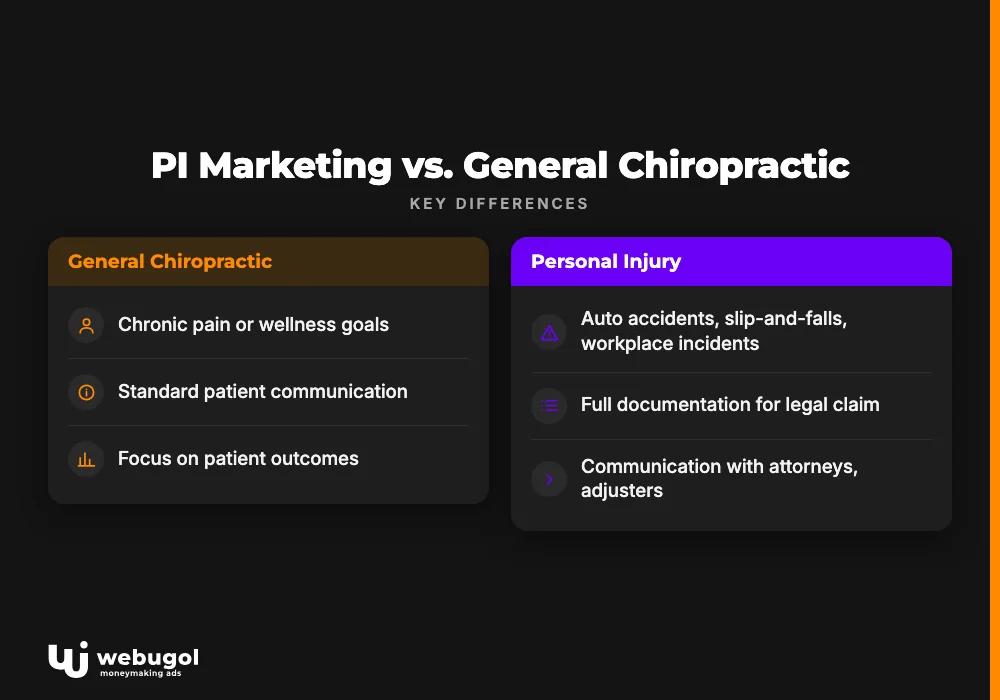
General chiropractic marketing targets patients with chronic pain or wellness goals. Chiropractic personal injury marketing targets a distinct group: people recently injured in auto accidents, slip-and-falls, or workplace incidents who need care that is fully documented for an active legal claim. That documentation requirement changes everything, from how appointments are structured to how you communicate with referring attorneys and insurance adjusters.
The patient volume in this niche is real. According to the National Highway Traffic Safety Administration (NHTSA), the US sees nearly 6 million vehicle collisions each year. US slip-and-fall incidents send approximately 1 million people to emergency rooms annually. Chiropractic care's non-surgical approach to spinal and soft tissue injuries makes it a primary treatment option across both categories.
PI marketing channels compared:
| Channel | Primary outcome | Typical timeline |
|---|---|---|
| Personal injury chiropractic SEO | Organic search visibility for injury queries | 3-6 months |
| Google Ads / PPC | Immediate lead flow from high-intent searches | Days |
| Attorney referral outreach | Recurring referred PI patients | 1-3 months |
| Review management | Higher search-to-appointment conversion | Ongoing |
| Content marketing | Domain authority and patient education | 4-8 months |
How do chiropractors market to personal injury attorneys?
Chiropractic marketing to attorneys runs on trust earned case by case. Attorneys refer to chiropractors who document injuries thoroughly, respond promptly, and deliver records that hold up in litigation. No ad campaign replaces that reputation.
Practical steps that actually move the needle:
- In-person introductions: Visit local PI firms briefly to explain your injury evaluation and documentation workflow. A one-page summary of how your records are structured for legal use gives attorneys something concrete to keep on file rather than a business card.
- Educational content delivery: A short guide on common soft tissue injury patterns and how chiropractic care addresses them positions you as a resource. Attorneys share useful tools with colleagues.
- Lunch-and-learn sessions: A 45-minute session at a law firm puts you in front of multiple attorneys at once and builds the familiarity that one-on-one meetings take months to create.
- Case follow-up notes: When an attorney refers a patient, send a brief written update on treatment progress within the first few appointments. Close the loop without being asked. Attorneys remember providers who communicate proactively.
Chiropractic marketing to attorneys compounds over time. An attorney who has a strong first experience refers again and introduces colleagues. Six to twelve months of consistent relationship-building generates referral networks that sustain themselves.
How can chiropractors get more personal injury patients?
The most efficient path combines two tracks running at the same time. Track one is capturing organic demand through personal injury chiropractic SEO for injury-specific local searches that reach patients who have already decided they need care. Track two is building attorney referral relationships through the outreach approach above. Both take time, so starting both simultaneously shortens the gap to stable patient volume.
On the SEO track, the target queries are specific. "Chiropractor after car accident [city]," "whiplash treatment near me," and "auto accident chiropractor [city]" all carry strong booking intent. Patients using these phrases have passed the "do I need care?" question. Your job is to rank when they search.
Chiropractic auto accident marketing through Google Ads bridges the gap while organic rankings build. A well-configured campaign targeting injury-specific keywords can generate appointment requests within the first week of launch. Use PPC as a bridge, not a permanent budget line.
Your website's content closes the loop. Injured patients are often confused about costs, documentation, and treatment length. A page that directly explains what to expect from chiropractic treatment after an accident, how PI lien billing works, and what records you generate for legal claims removes friction before the first phone call.
What digital marketing works best for personal injury chiropractors?
SEO delivers the highest long-term return. Injury-specific search queries carry strong booking intent. Ranking for "chiropractor for whiplash [city]" drives leads that convert at higher rates than broad awareness campaigns because these searchers are past the "maybe I need care" stage. Organic rankings also do not require ongoing per-click spend once established.
PPC accelerates early results. Chiropractic auto accident marketing through Google Ads targets patients at the moment they search. Campaigns focused on "car accident chiropractor" or "whiplash treatment" are particularly effective in metro markets where organic competition is high. The downside is direct: when you stop paying, visibility stops.
Content builds authority on both tracks. Blog posts answering real patient questions, such as what happens to the spine in a rear-end collision or how long whiplash treatment takes, attract organic traffic and demonstrate clinical expertise. Understanding how healthcare practices use social media effectively helps you allocate content effort where injured patients actually engage with it.
For chiropractor online marketing, consistency is the variable that separates practices that plateau from practices that grow. Running SEO, PPC, and content steadily for twelve months outperforms running each channel in isolated bursts.

How do chiropractors build attorney referral networks?
Attorney networks grow through three sustained behaviors: showing up, delivering, and following up. All three matter. Missing any one of them stalls the network.
Showing up means attending bar association events, local legal networking groups, and PI-focused continuing education sessions where attorneys gather. Consistent presence over months creates the familiarity that turns into first referrals. One appearance does nothing. Quarterly attendance over a year builds recognition.
Delivering means your documentation arrives when the attorney needs it, your records are legible and thorough, and your billing process does not complicate the case. Attorneys have their professional reputations at stake when they refer a client. One problematic experience ends the relationship. One exceptional one typically generates introductions within the same firm.
Following up is where most practices lose ground. A brief monthly case-status note to each referring attorney, even a single paragraph on treatment progress and next milestones, keeps your name active between referrals. It also demonstrates the standard of communication that attorneys cite when recommending a chiropractor to partners or clients.
Local SEO and online presence for PI practices
Local search visibility for PI practices requires a verified Google Business Profile, consistent NAP (Name, Address, Phone Number) data across all directories, and injury-specific landing pages on your site. A generic "services" page rarely ranks for "car accident chiropractor [city]." A dedicated, well-structured page does.
Patient reviews convert searchers to booked appointments. A practice with 50 reviews averaging 4.8 stars will outbook a competitor with 10 reviews regardless of ranking position. Ask every PI patient for a review before they leave the office. Respond to every review within 48 hours.
Email follow-up extends the patient relationship through longer treatment plans. Automated sequences covering appointment reminders, recovery milestone education, and documentation status updates reduce patient drop-off during extended PI treatment programs, which directly affects case outcomes and attorney satisfaction.

Take the next step in chiropractic personal injury marketing
Effective chiropractic personal injury marketing requires SEO, paid ads, attorney outreach, and patient experience working together as one system. Webugol builds integrated marketing programs for chiropractic practices that want consistent, measurable PI patient growth. Explore our healthcare growth program or contact us to discuss what your local market needs.
FAQ
What is chiropractic personal injury marketing?
Chiropractic personal injury marketing is the combination of SEO, paid advertising, content, and attorney referral outreach that practices use to attract patients with active injury claims and legal cases. It differs from general chiropractic marketing because it also targets the attorneys and legal professionals who refer those patients. Practices that coordinate all channels consistently grow PI patient volume faster than those relying on a single tactic.
How do chiropractors get referrals from personal injury attorneys?
The most reliable approach combines in-person introductions to local PI firms, consistent case follow-up communication, and documentation quality that attorneys can rely on for their clients' legal claims. Attorneys refer repeatedly to providers who communicate clearly, deliver records on time, and do not create billing complications. Building this reputation typically takes three to six months of consistent case-level performance.
What SEO terms should PI chiropractors target?
High-value targets include location-specific phrases like "chiropractor after car accident [city]," "whiplash treatment near me," and "auto accident chiropractor [city]." These searches carry strong booking intent from patients who are already looking for post-accident care. Longer, specific phrases convert at higher rates than broad terms like "chiropractor [city]" because the searcher has already moved past the awareness stage.
How long does PI marketing take to generate results?
Google Ads campaigns can produce appointment requests within days of launch. Attorney referral programs typically generate consistent volume after one to three months as trust builds through initial case experiences. SEO takes three to six months to show meaningful organic traffic gains. Running all three channels simultaneously shortens the overall time to sustainable PI patient volume.
Does social media help with PI marketing for chiropractors?
Social media works as a credibility and education channel rather than a primary patient acquisition source for PI practices. Sharing injury recovery content and patient outcome stories builds awareness and keeps your practice visible between accident events. It is most effective as a complement to SEO and attorney referral outreach, not a standalone pi marketing strategy for chiropractors.