



Health influencer marketing: build campaigns that convert
Health influencer marketing places your healthcare brand inside conversations that patients are already having, through voices they already trust. For US clinics and telehealth companies, the channel offers something paid search rarely delivers: third-party credibility that shortens the path from awareness to booked consult. When healthcare influencer campaigns are built with clear performance goals, compliance guardrails, and end-to-end tracking, they generate measurable acquisition outcomes, not just impressions.
If your ad spend keeps climbing while new patient volume stays flat, the gap is often at the trust layer, not the targeting layer. Influencer partnerships close that gap before the funnel even starts. The structural challenge for a clinic at $20k/month in ad spend is identical to the one that blocks a brand-new practice: an audience that does not yet believe you are the right provider.
What makes a health influencer credible and trustworthy?
Credentials and engagement quality are the two signals that separate trustworthy healthcare content creators from risky ones. Credentials come first. A registered dietitian discussing nutrition carries more weight than a lifestyle blogger covering the same topic without formal training. A physician endorsing a telehealth program signals clinical credibility that a general wellness personality cannot replicate.
After credentials, audit engagement quality. An influencer with 15,000 active followers in a targeted wellness niche typically drives better consult-booking intent than one with 200,000 passive followers who scroll past posts. Comments and saves indicate the audience is genuinely responsive, not just present.
Three signals to verify before committing to any medical influencer partnership:
- The influencer discloses sponsored relationships prominently, with clear language such as "#ad" or "paid partnership," as required under FTC guidelines. Buried disclosures at the bottom of a caption do not meet the standard.
- Their content references established health guidelines or qualified sources rather than unsupported personal opinion alone.
- Their audience demographics match your target patient profile by age, health interest, and geography.
Use tools like AspireIQ or Upfluence to access audience demographic data and historical campaign performance before signing any agreement. Vetting at this stage protects both influencer marketing compliance and campaign ROI.
Micro vs. macro: selecting the right healthcare content creators
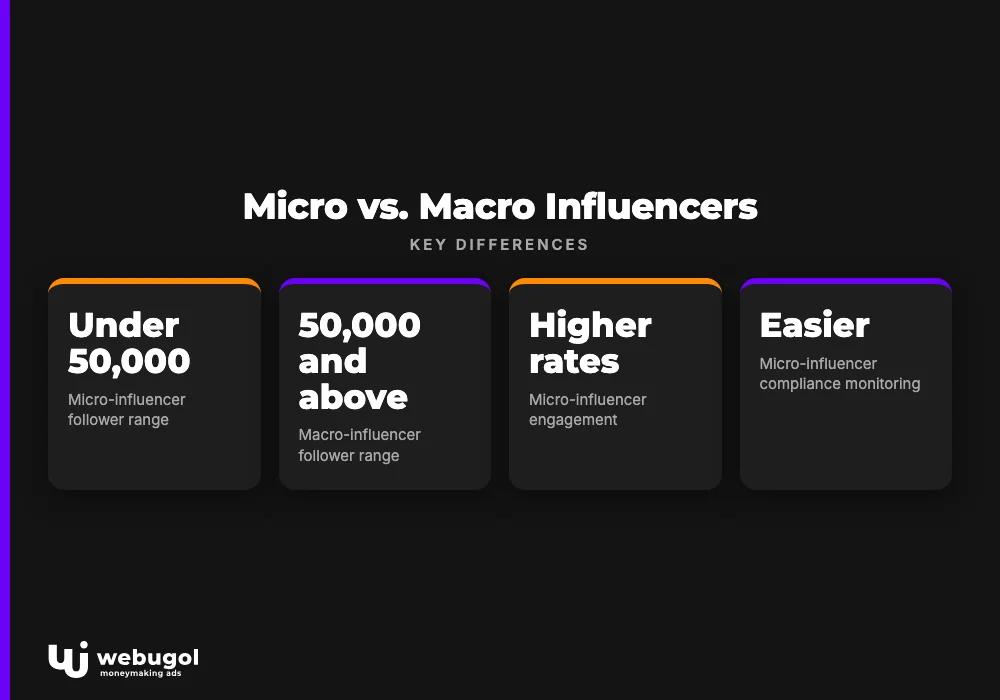
The choice between influencer tiers is not a budget decision alone. It is a campaign-fit decision in health influencer marketing that shapes both your compliance workload and expected conversion outcomes. The table below shows the practical tradeoffs.
| Micro-influencer | Macro-influencer | |
|---|---|---|
| Follower range | Typically under 50,000 | 50,000 and above |
| Engagement | Higher rates, closer community | Broader reach, lower relative engagement |
| Best use | Specialty conditions, local patient acquisition | National brand awareness launches |
| Compliance | Easier to brief and monitor | More complex, larger approval chains |
| Budget fit | Accessible for most clinic budgets | Requires larger spend plus licensing costs |
Micro influencer healthcare campaigns work especially well for specialty clinics, telehealth programs targeting specific demographics, and high-consideration services like GLP-1 weight-loss programs or men's health where community trust accelerates the booking decision. The closer audience dynamic means that a recommendation from a trusted micro-influencer often generates stronger consult intent than a broad reach campaign.
Macro influencer campaigns fit national telehealth launches where scale is the primary objective. The tradeoff is longer content approval chains and higher total cost when usage rights, licensing, and compliance review are included.
Medical influencer partnerships with licensed practitioners, physicians, PAs, registered nurses, occupy a distinct tier. Their clinical credibility is inherent and works well for high-trust healthcare categories. That said, their content still requires the same compliance review as any health marketing material your practice publishes.
What regulations apply to healthcare influencer marketing?
Influencer marketing compliance in healthcare is non-negotiable. Two frameworks govern almost every US campaign: HIPAA and FTC disclosure requirements, and platform policies from Google and Meta add a third layer on top.
HIPAA limits what patient-related information influencers can reference. Any testimonial that describes a patient's condition, treatment outcome, or health history without explicit written consent from that patient is a HIPAA exposure. This applies even when the influencer is describing their own experience as a patient of your practice. Obtain written authorization before any patient story becomes campaign content, and have that authorization reviewed by a compliance professional before it is used.
FTC disclosure rules require that any paid or gifted relationship be clearly labeled. The disclosure must appear prominently at the top of the post in terms a general audience immediately understands. "Thanks to [brand]" is not sufficient. "#ad" or "paid partnership with [brand]" is. A hashtag buried at the bottom of a long caption fails the standard.
Platform health advertising policies apply whenever influencer content is boosted as a paid ad. Google and Meta restrict targeting options for health conditions and subject certain health claims to editorial review. Any influencer post that the brand intends to amplify through paid distribution must pass the same compliance review as your direct ad creative before it runs.
Engage a legal or compliance reviewer before finalizing influencer contracts. For GLP-1 programs, TRT clinics, and mental health services, claim restrictions are particularly detailed. A single non-compliant post can trigger platform enforcement or regulatory attention that disrupts the entire campaign.
How do I find the right health influencer for my brand?
Start with audience fit, not follower count. Define the patient profile you are trying to reach: age range, primary health concern, geographic market, and the type of content they engage with. Then find influencers whose existing audience matches that profile, not just influencers who post health content in general.
Patient advocacy marketing is one underused approach. Patients who have documented their own health journeys, particularly around chronic conditions or significant procedures, often have highly engaged audiences that trust their perspective precisely because it is not clinical. These creators tend to have lower fees, produce authentic content, and attract audiences actively seeking condition-specific guidance, not lifestyle content that happens to mention a brand.
Practical steps for building a vetted candidate list:
- Search platform hashtags relevant to your specialty and audit the accounts producing consistent, accurate content in that niche over at least six months.
- Use AspireIQ or Upfluence to filter candidates by audience demographics, engagement rate, and health category experience.
- Review prior health brand partnerships: how were they disclosed, and how did the audience respond in the comments?
- Request a media kit and audience breakdown before entering any fee negotiation.
Match the influencer's voice and values to your brand. A longevity clinic and a weight-loss telehealth program both serve health audiences, but they require different content styles and different levels of clinical credibility from their partners. Mismatched tone undermines the authenticity that makes influencer content effective in the first place.
Building a wellness influencer strategy that holds at scale
A wellness influencer strategy fails at scale when it was never connected to the acquisition system beneath it. Impressions and engagement do not matter if the downstream landing pages, intake forms, and lead follow-up flows cannot handle the traffic or convert it. The influencer gets the audience's attention. Your system is what converts that attention into a booked consult.
Before any campaign launches, confirm that tracking is in place end-to-end. This means UTM parameters on every influencer link, conversion events firing correctly in Google Analytics and your ad platform, and a CRM stage that tags influencer-sourced leads distinctly from paid search leads. Without this structure, you cannot measure what worked. And you cannot scale what you cannot measure.
Authenticity is the operational constraint of health influencer marketing. The most effective campaigns start with individualized outreach, not templated briefs. Give influencers access to clinical staff or relevant product context so their content reflects genuine understanding rather than surface-level brand messaging. Invite them into the brand story, limit hard product placements, and prioritize experience narratives over promotional claims. This approach is both more compliant and more effective with health audiences, who are attuned to inauthenticity in ways that most consumer audiences are not.
Understanding how patients engage with health content across digital platforms is essential context for any health influencer marketing campaign. Influencer content does not sit in isolation; it intersects with how patients search, compare providers, and make final decisions.
Multi-channel integration: where health influencer marketing fits
Health influencer marketing works hardest as part of a broader patient acquisition system. The goal is not reach in isolation; it is a coordinated sequence that moves a patient from first exposure to booked appointment.
Social challenges and user-generated content. A branded hashtag campaign on Instagram or TikTok extends the influencer's initial reach organically. Patients who discover your practice through an influencer post and then share their own experience become a secondary trust signal that scales without additional media spend. Track participation with a branded hashtag and monitor the content for compliance.
Email follow-up for unconverted leads. Influencer traffic that reaches your consult booking page but does not convert immediately needs a structured follow-up path. Building patient intake email sequences that re-engage unconverted leads is how you recover value from expensive influencer-driven clicks that do not book on the first visit.
Live Q&A sessions. A joint session with the influencer and a clinical team member on YouTube, Instagram Live, or Zoom adds interactive credibility. The live format builds trust in real time, and the recorded session generates reusable content for organic search.
Short-form video series. Content developed with influencers for Reels and TikTok performs well when tied to specific conditions or service lines your practice offers, keeping the audience relevant to your acquisition goals rather than attracting general health enthusiasts who are unlikely to convert.
The core principle: every channel should send trackable traffic to a single, optimized destination. If the landing page does not convert influencer traffic, changing the influencer will not fix the problem.

Setting campaign goals that connect to revenue
All successful health influencer marketing campaigns start with measurable, revenue-linked objectives set before the first post goes live. Vague goals like "raise awareness" are proxies; they do not connect to what your practice actually needs: registered patients, completed consults, and program enrollments.
Translate vague objectives into specific targets. If you are promoting a new telehealth program, define success as a specific number of consult bookings within 30 days, a 20% increase in website sessions from the influencer's audience, or 500 new email subscribers from the campaign landing page. These are numbers your team can act on. "Raise awareness" is not.
Measurable goals also protect the campaign from internal pressure to change creative or switch influencers based on anecdote rather than data. When everyone agrees on the target metric before launch, the conversation at week four is about the number, not about subjective impressions of the content.
How do I measure the ROI of a health influencer campaign?
Track these metrics using Google Analytics for traffic attribution, your CRM for lead and booking volume, and platform analytics for social engagement. Hootsuite and HubSpot can centralize data across channels. The metric that matters most for a healthcare practice is consult bookings attributed to the influencer campaign, matched against total partnership cost.
Health influencer marketing ROI is harder to isolate than e-commerce ROI because the sales cycle is longer. Patients often touch multiple channels before booking. Use multi-touch attribution rather than last-click. Track the influencer campaign's contribution to assisted conversions alongside direct conversions so you are not undercounting the channel's actual impact.
Review performance at 30, 60, and 90 days. At 30 days, you should see traffic and lead trends forming. By 60 days, early booking data indicates whether the campaign is generating qualified leads or high-volume but low-intent traffic. The 90-day window is where cost-per-acquisition can be compared against your CPA benchmark for the channel and a scaling decision can be made with real evidence.
Supplement digital attribution with direct patient surveys at intake. "How did you hear about us?" remains one of the most reliable signals for channels like influencer marketing where digital attribution is imperfect because patients switch devices and browsers between first exposure and final booking.
How much does a healthcare influencer marketing campaign cost?
Campaign cost varies by influencer tier, content format, usage rights, and exclusivity requirements. Micro-influencers with under 50,000 followers command lower fees and are accessible for clinics with modest marketing budgets. Macro-influencers require higher fees and often include separate costs for content licensing if the brand wants to repurpose material in paid ads.
The influencer fee is not the full cost. Add compliance review time, legal contracting, content production support, landing page setup, and tracking configuration. Under HIPAA, the compliance review adds real time and cost to every campaign cycle. Build that into your budget from the start, not as an afterthought when the first post is already scheduled.
Campaigns with the best cost efficiency tend to be ongoing partnerships, not one-off posts. A single post creates a traffic spike. A three-month content partnership builds progressive audience trust, generates a library of content assets, and allows performance data to inform creative and targeting adjustments between cycles. For clinics running membership or continuity programs, that sustained brand presence drives more enrollment than any single campaign date.
Ready to connect influencer spend to patient revenue?
Health influencer marketing works when it is connected to a full patient acquisition system: from first impression to booked consult to CRM attribution. Without tracking, the spend is invisible. Without compliant content, the risk is real. Without a downstream funnel that converts, the traffic is wasted.
Webugol builds acquisition systems for US healthcare brands that connect influencer and paid channels to measurable revenue outcomes. The Healthcare Growth System covers the full 90-day path: tracking foundation, conversion-led campaign launch, and ongoing performance optimization across channels. Book a strategy call to audit what your current patient acquisition path is actually costing you.
FAQ
How do I find the right health influencer for my brand?
Start with your target patient profile, then find influencers whose existing audience matches that profile by age, health interest, and geography. Use vetting tools like AspireIQ or Upfluence to filter by engagement rate and health category experience, and review prior brand partnerships before making contact.
What regulations apply to health influencer marketing?
US healthcare influencer campaigns must comply with HIPAA, which prohibits use of patient information without written consent, and FTC rules, which require clear and prominent disclosure of paid partnerships. Platform-specific policies from Google and Meta add further restrictions around health condition targeting and outcome claims.
How do I measure the ROI of a health influencer campaign?
Set specific measurable goals before launch, such as consult bookings, email sign-ups, or website traffic with a defined target. Use Google Analytics and your CRM to attribute leads and conversions to the influencer campaign, then compare cost-per-acquisition against your benchmark at 30, 60, and 90 days.
What makes a health influencer credible and trustworthy?
Credibility comes from verifiable credentials, high engagement rates relative to follower count, transparent FTC-compliant disclosure of sponsored content, and a consistent history of accurate health information. Prioritize audience relevance and engagement quality over raw follower count.
How much does a healthcare influencer marketing campaign cost?
Cost varies by influencer tier, content format, usage rights, and campaign duration. Micro-influencer partnerships are more accessible for smaller clinic budgets, while macro-influencer campaigns require higher fees plus additional costs for content licensing and compliance review. Ongoing multi-month partnerships typically deliver better cost efficiency than single posts.