



Sunglasses marketing strategy: how eyewear brands build consistent sales
A strong sunglasses marketing strategy connects social media eyewear advertising, targeted influencer partnerships, and seasonal campaigns into a system that moves buyers from discovery to repeat purchase. Brands that grow year over year own a clear digital channel mix and a repeatable approach to audience activation. The ones that plateau usually run the same tactics in isolation, with no framework tying awareness to conversion to retention. This guide covers how to build the system instead.
If you are still mapping the fundamentals of eyewear brand promotion, the structural gaps that stall a new brand are the same ones that hold established brands back at their next revenue ceiling. The fix is identical either way: build the system before scaling the spend.
What is the best marketing strategy for sunglasses brands?
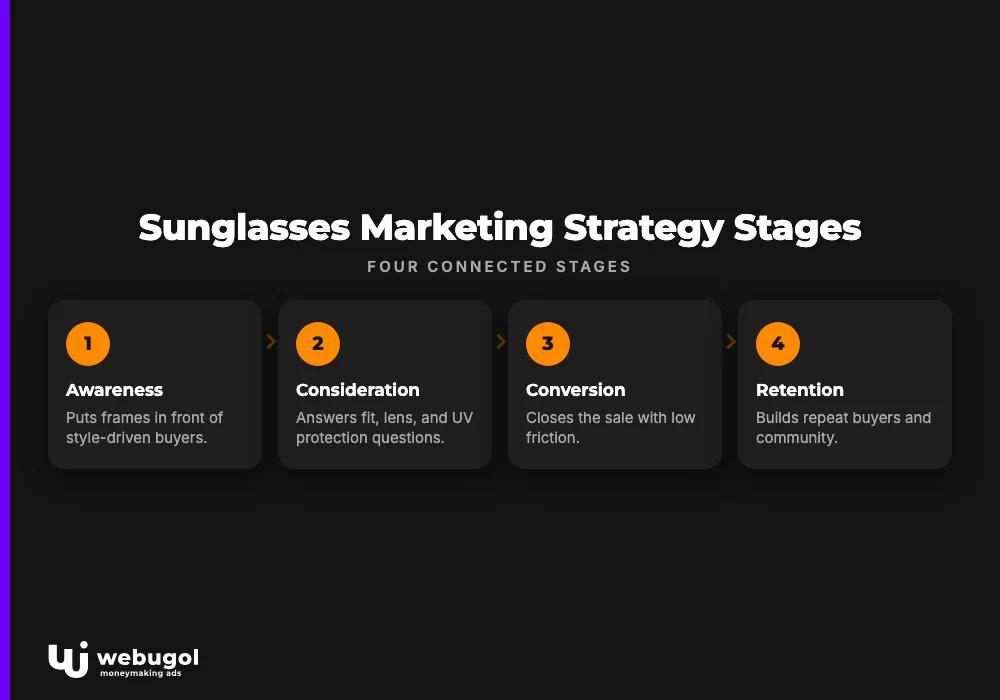
The most effective sunglasses marketing strategy operates across four connected stages: awareness, consideration, conversion, and retention. No single channel covers all four. The brands seeing consistent online eyewear sales combine them deliberately.
| Stage | Primary channels | What it does |
|---|---|---|
| Awareness | Instagram, TikTok, Pinterest | Puts frames in front of style-driven buyers |
| Consideration | SEO, YouTube, review content | Answers fit, lens, and UV protection questions |
| Conversion | Google Shopping, shoppable posts | Closes the sale with low friction |
| Retention | Email, referral programs, UGC | Builds repeat buyers and community |
Brands that only run awareness campaigns stall at recognition. Brands that only run conversion ads burn budget on cold audiences. The growth comes from connecting the layers and measuring each transition point. This staged approach applies across consumer product categories, as outlined in our broader digital marketing for product brands coverage.
How can eyewear brands use social media effectively?
Pick two platforms where your buyers already spend time, produce content that shows the sunglasses in real use, and use shoppable formats to shorten the path to purchase.
Instagram and Pinterest lead for social media eyewear advertising. Instagram rewards lifestyle imagery. Think frames at the beach, at a festival, during a morning run. Pinterest captures intent-driven buyers who are actively planning their next purchase. TikTok drives discovery for brands targeting buyers under 35.
Four moves that lift performance:
- Post lifestyle imagery three to four times per week to maintain consistent in-feed presence
- Use carousel ads to show multiple colorways or frame shapes in a single unit
- Add shoppable tags to all product posts to reduce clicks between discovery and checkout
- Reply to comments with product detail, not generic responses, to signal quality to other observers
User-generated content costs little and converts well. Ask customers to tag your brand after purchase, then feature their posts on your feed. It builds social proof without a production budget and shows potential buyers how the frames look on real people, in real settings.
What influencer marketing tactics work for sunglasses?
For influencer marketing eyewear campaigns, micro-influencers with 10,000 to 100,000 followers in fitness, travel, and fashion consistently outperform mega-influencers on ROI. Their audiences are smaller but tightly aligned, and they trust their recommendations over polished brand content.
The tactic that works: gifting seedings paired with a brief to show sunglasses in a real-world setting, not a studio shot. A travel creator wearing your frames on a mountain hike, a fitness creator logging an early run, a lifestyle creator at a weekend market. These contexts sell because they answer the buyer's real question: "Will these work for my life?"
Three things that lift influencer campaign performance:
- Negotiate story and reel pairs, not single posts; stories drive direct link clicks, reels drive reach
- Request authentic caption language over scripted copy, since audiences detect scripts quickly
- Track promo codes per creator to measure actual conversions, not impressions alone
Brand partnerships with adjacent lifestyle labels, travel gear companies, or activewear brands expand reach without adding to your influencer budget. A co-branded sunglasses advertisement built around a shared audience costs less than buying that audience through ads.
How to run seasonal campaigns for eyewear?
Seasonal eyewear campaigns should map to the natural demand calendar. Peak buying windows are early summer and back-to-school periods. Gift-driven spikes happen around Christmas and Valentine's Day.
Early summer is the highest-volume window. Bundles work well here: sunglasses paired with a branded case, cleaning kit, or sun protection essentials add perceived value and increase average order value without a straight discount. Limited-edition colorways or frame drops create urgency and qualify as genuine product news, earning organic social coverage alongside paid campaigns.
For holiday campaigns, the positioning shifts from "wear these" to "give these." Gift-ready packaging, gift guides produced as both blog content and social carousels, and curated price-tier selections make the buying decision easier for the gift-giver who does not know frame sizes or lens types.
Weather-based ad targeting, available through Google Ads and Meta, activates sunglasses campaigns in regions with high UV index days. This reaches buyers when the need is immediate, not aspirational. Timing the sunglasses marketing strategy around real weather and buying cycles is one of the most underused levers in the category.
Which digital channels drive the most eyewear sales?
The highest-converting channels for online eyewear sales are Google Shopping, Instagram Shopping, and email to past customers. Search ads capture buyers with purchase intent; social shopping closes impulse buyers; email reactivates the most valuable segment you already own.
SEO and content marketing build the durable channel. Product pages optimized for frame type, face shape, and lens technology attract buyers doing pre-purchase research. Blog content addressing how to choose sunglasses for specific activities or face shapes builds authority and captures traffic before the buyer reaches a price-comparison search.
The fashion brand mobile marketing guide is worth reading alongside this: a large share of fashion and accessories purchases now start on a phone. Product pages that load slowly or display poorly on mobile lose buyers before they see the frames. Speed and mobile display quality are not technical details. They are revenue variables.
SEO, paid, social, and email are not competing priorities. Each stage of the buyer journey has a channel that fits it best. Brands that coordinate them around a single sunglasses marketing strategy compound gains across all four instead of running them in isolation.
Stop losing buyers to a disconnected channel strategy
The marketing directors and brand owners who reach out to Webugol tell us the same starting point: they tried individual tactics without a framework and saw inconsistent results. When we map their channels to their actual buyer journey and align their content calendar to their sales cycles, the numbers stabilize and then compound. That structural fix applies whether you run a direct-to-consumer sunglasses brand or manage a multi-line eyewear portfolio.
The brands that compound these gains have one more thing in common: a site that loads fast, converts on mobile, and does not break under traffic. Marketing strategy without that foundation leaks at every stage. We build both.
Contact us to audit your current channel mix and site performance, and find what is holding back your next growth stage.
FAQ
What is a sunglasses marketing strategy?
A sunglasses marketing strategy is a coordinated plan covering awareness, consideration, conversion, and retention for an eyewear brand. It connects channels like social media, search, influencer partnerships, and email into a system that moves buyers from discovery to purchase and back for repeat orders.
How can small eyewear brands compete with larger ones?
Small brands compete on specificity: tighter niche targeting, faster product storytelling, and micro-influencer relationships that larger brands cannot replicate at scale. Focusing on a specific buyer type, activity, or aesthetic lets smaller brands own a segment that generalist competitors overlook.
What sunglasses advertisement ideas work for a limited budget?
User-generated content campaigns, micro-influencer gifting seedings, shoppable Instagram posts, and weather-triggered paid ads are all effective with smaller budgets. Each targets buyers closer to the point of decision, keeping cost per acquisition manageable while building brand recognition over time.
How do seasonal campaigns increase eyewear sales?
Seasonal campaigns align promotions with the natural demand calendar: summer travel drives impulse purchases, back-to-school periods drive practical buys, and holiday windows shift the angle to gifting. Brands that plan around these cycles capture buyers at their highest purchase intent instead of running promotions into indifferent audiences.

