



Mobile marketing for fashion brands: strategy that converts
Mobile marketing for fashion is the practice of reaching shoppers through optimized websites, apps, SMS, push notifications, and social media on their smartphones to drive discovery and purchases. Industry analysis shows mobile devices now account for more than half of global e-commerce traffic. Fashion brands sit at the center of that shift. Brands that build their strategy around mobile-first behavior see stronger engagement, better retention, and more conversions.
What is mobile marketing for fashion brands?
Mobile marketing for fashion brands is a coordinated set of channels designed to reach customers where they spend most of their screen time. It covers responsive web design, mobile SEO, push notifications, social commerce, SMS campaigns, and in-app experiences. Consider how fashion shoppers actually behave: browsing Instagram during a commute, opening a push alert about a flash sale, speaking a query into their phone to find a nearby store. A clear fashion brand mobile strategy connects all of those moments into a coherent customer experience.
Fashion is well-suited to mobile. The category is visual, trend-driven, and impulse-friendly. Short browsing sessions and fast purchase decisions make smartphones the natural home for fashion discovery.
Unlike traditional advertising, this approach can reach customers at any point in their day. It is also measurable at each stage, from the first impression on a social feed to the completed purchase in the app.
How to optimize a fashion website for mobile users?
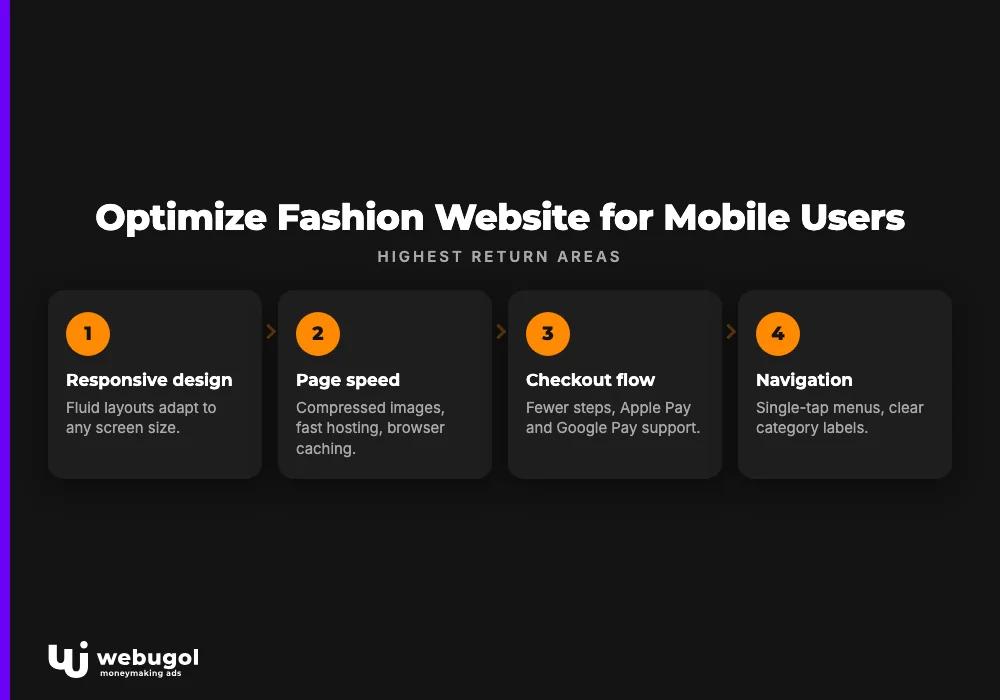
A mobile-optimized fashion site loads fast, fits any screen, and removes friction between browsing and buying. These four areas deliver the highest return:
| Priority | Fix | Impact |
|---|---|---|
| Responsive design | Fluid layouts that adapt to any screen size | Prevents layout breaks that cut sessions short |
| Page speed | Compressed images, fast hosting, browser caching | Slow pages lose shoppers before checkout |
| Checkout flow | Fewer steps, Apple Pay and Google Pay support | Cuts cart abandonment on small screens |
| Navigation | Single-tap menus, clear category labels | Lets shoppers find products without frustration |
Improving page speed matters especially for fashion sites. Product images are large and numerous. A one-second delay translates directly into abandoned sessions.
Checkout flow deserves equal attention. Reducing steps and accepting mobile wallets like Apple Pay and Google Pay removes the friction that causes shoppers to quit at the final stage of purchase.
Mobile SEO fashion: getting found in search
Mobile search optimization determines whether your brand appears when shoppers query from their phones. Good mobile SEO earns rankings. Poor setup hands those placements to competitors.
Three areas move the needle most. First, verify that the mobile version of every page loads quickly and is indexed correctly by Google. Second, target conversational queries to capture voice searches, which are more common on mobile than on desktop. Third, add local SEO signals, including store addresses and hours, if the brand has physical retail locations.
Product pages need specific attention. High-quality images, concise descriptions, and structured data markup each contribute to better rankings and higher click-through rates from search results.
Which mobile marketing strategies work best for fashion?
Mobile marketing for fashion becomes most effective when channels work together rather than independently. The strongest mobile commerce fashion mix combines social commerce, paid retargeting, SMS, push notifications, and email, each targeting a different stage of the customer journey. The right combination depends on audience, price point, and where the brand already has momentum.
Social commerce converts browsers without a redirect. Instagram Shops, TikTok Shopping, and Facebook Shops let shoppers complete purchases inside the platform. For a visual category like fashion, this shortens the discovery-to-sale path considerably. Social media for fashion mobile marketing is more shoppable now than ever before, with native checkout options removing the friction that previously separated inspiration from purchase.
Retargeting ads recapture shoppers who browsed but did not buy. Dynamic product ads display the exact items a user viewed, personalized to their browsing history. Seasonal campaigns tied to new collections or limited-time offers add urgency at peak intent moments.
Influencer collaborations reach audiences the brand cannot access through its own channels. User-generated content, including real customer photos and reviews, builds credibility that polished advertising does not. Collaborating with creators amplifies both reach and purchase intent across social channels. Similar influencer-led approaches drive results in adjacent fashion niches, as shown in fashion accessory brand campaigns.
Mobile-optimized email remains a consistent revenue driver. Most emails are opened on mobile devices. Campaigns need responsive layouts, brief subject lines, and CTAs sized for thumbs. Sending during commutes or lunch breaks, when mobile usage peaks, consistently lifts open rates.
What should a fashion mobile app include to improve sales?
A fashion mobile app is one of the highest-impact channels in your mobile strategy, giving the brand direct, persistent access to the shopper's device. A strong app is fast, personal, and gives users a reason to return.
Personalized recommendations based on browsing history and past purchases keep the experience relevant without asking users to configure anything. In-app loyalty programs and exclusive promotions give shoppers a reason to open the app rather than visit a competitor. Live chat or AI-assisted customer support resolves questions at the moment they arise, cutting the hesitation that ends in abandoned sessions.
Intuitive navigation is foundational. A confusing interface loses users on the first visit. Simple menus, fast search, and clearly organized categories separate apps that drive revenue from apps that get deleted.
Fashion app marketing also depends on using in-app channels well. Personalized push alerts about new arrivals and restocked items generate higher engagement than generic broadcast messages. For brands building from scratch, MVP development services help validate the core experience before committing to a full build.

How do push notifications increase fashion brand engagement?
Push notifications for fashion brands are one of the highest-return tactics for re-engaging existing customers. They deliver targeted messages directly to a shopper's lock screen, bypassing email inboxes and requiring no active browsing. Relevance and timing are everything.
Customized push notifications that reference past purchases, recently viewed products, or an abandoned cart significantly outperform generic promotions. Timing amplifies the effect. A notification sent during a flash sale or immediately after cart abandonment reaches the shopper at the moment of highest intent.
SMS marketing for fashion retail follows the same principle. SMS carries consistently high open rates compared to most digital channels. Fashion retailers use it for flash sales, restock alerts, and personalized offers. Both SMS and push notifications require balance: too many messages lead to unsubscribes, while well-timed messages with genuine value build long-term loyalty. Brands that segment their audiences by past purchases and browsing behavior, then use analytics to identify optimal send times and high-converting offer types, get better results from both channels.
Consistent brand identity across all notifications reinforces recognition and trust with every interaction.
Ready to strengthen your fashion brand's mobile strategy?
This strategy works when every channel is aligned: a fast mobile-optimized site, a well-designed app, social commerce that meets shoppers where they scroll, and SMS or push campaigns timed for peak intent. Brands that treat mobile as the primary channel, not an add-on, build stronger customer relationships and see more consistent results.
If you are ready to build or improve your fashion brand's mobile presence, Webugol works with brands at every stage, from strategy through execution. Contact us to discuss how a focused mobile strategy can move the needle for your brand.
FAQ
What is mobile marketing for fashion brands?
Mobile marketing for fashion covers all tactics used to reach and convert shoppers on their smartphones, including mobile-optimized websites, apps, SMS, push notifications, social commerce, and paid mobile ads. It spans the full customer journey from initial discovery through purchase to repeat buying.
How do I make my fashion website mobile-friendly?
Use a responsive design that adapts to any screen size, reduce load time through image compression and fast hosting, and cut the checkout process to as few steps as possible. Supporting mobile payment options like Apple Pay and Google Pay removes a significant barrier at the final stage of purchase.
Which social platforms work best for mobile commerce fashion?
Instagram, TikTok, and Facebook are the strongest platforms for mobile commerce fashion because they combine visual-first formats with native shopping features. Instagram Shops, TikTok Shopping, and Facebook Shops allow purchases without leaving the platform, reducing the drop-off that occurs when shoppers must navigate to a separate site.
How often should fashion brands send push notifications?
Most fashion brands find that two to four push notifications per week is the practical ceiling before unsubscribe rates climb. Triggered messages tied to specific behaviors, such as cart abandonment or a restock of a saved item, consistently outperform scheduled broadcast messages because they arrive at moments of genuine intent.
What makes a fashion mobile app successful?
A successful fashion app combines personalized product recommendations, a smooth checkout experience, a loyalty or rewards program, and well-timed push notifications. Fast load times and clear navigation are the foundation; without them, even strong features fail to retain users over time.