



Branding for Healthcare 2025: Expert Tips by Webugol
As we get closer to 2025, healthcare companies are facing problems they’ve never had to deal with before. Competition is fiercer than ever, patient expectations have changed, and technology is transforming medical care delivery and perception. In this setting, branding for healthcare has grown beyond just logos and color schemes. It is now a strategic necessity that is very important for the success of an organization.
Before making a decision, patients today thoroughly investigate healthcare providers, frequently selecting them based on brand identity rather than just clinical credentials. Poor branding can weaken even the most skilled doctors, while great branding fosters patient trust.
Why Branding Is Critical for Healthcare in 2025
Trust as the Foundation
Healthcare decisions involve deep vulnerability. All healthcare interactions are built on trust because patients commit their lives and well-being to healthcare providers they sometimes hardly know. Branding for healthcare plays a key role in building and maintaining that trust.
Preceding the initial patient visit, a strong healthcare organization communicates proficiency, empathy, and dependability. Consistent images, a clear message, and patient-focused communication convey professionalism and empathy. A unified, successful healthcare brand gives patients more faith in the facility’s ability to deliver high-quality care.
Responding to Consumer Behavior Changes
Healthcare consumers today research providers, read reviews, and rate brands online before visiting a facility. Healthcare companies need to provide smooth, expert experiences across all channels to remain competitive.
Differentiation in a Competitive Market
Healthcare markets are more competitive than ever; hence, organizations must clearly communicate what sets them apart.
Effective healthcare branding emphasizes important competencies, specializations, and treatment values. It defines brands and gives patients unique reasons to choose them. Personalized service, cutting-edge technology, community service, or specific expertise are all benefits that are enhanced and made memorable by effective branding.
Key Elements of a Strong Healthcare Brand
Clear Brand Identity Foundation
- An effective healthcare organization has a strong visual identity, communications themes, and brand personality.
- Color schemes that promote healing and trust, including calming blues and greens, are ideal for healthcare services.
- The organization’s voice, tone, and personality are all part of the brand identity, which goes beyond visual components. Branding for healthcare should sound qualified but caring.
- Healthcare content is commonly read by stressed or illiterate people, so typography should prioritize readability and accessibility.
- The personality should resonate with the target patients and represent the culture and values of the company.
Patient-Centric Messaging Strategy
Branding for healthcare prioritizes patients in all communications. This means focusing messaging on patient outcomes, experiences, and benefits rather than organizational achievements or clinical procedures.
This healthcare branding strategy requires an understanding of patient concerns throughout their healthcare experience. Messaging should present the company as a reliable partner in the patients’ efforts to improve health and wellness while also understanding the stress and uncertainty that patients frequently experience.
Brand Consistency Across Touchpoints
Maintaining a consistent brand across all internet touchpoints fosters professionalism and trust while producing seamless experiences and patient loyalty. Unified voice and tone, coordinated patient experiences, consistent graphic displays, and linked message themes are all necessary for better brand recognition. Patients can question organizational competency or reliability if branding is inconsistent.
Recommendations for Achieving Consistent Branding in Healthcare
- Develop Comprehensive Brand Guidelines
- Provide Regular Training and Education
- Assign a Brand Champion
- Utilize Centralized Tools and Templates
- Conduct Periodic Audits
- Encourage Collaboration Across Teams
- Adapt and Update Brand Guidelines as Needed
Internal alignment and well-defined brand guidelines that are understood and followed by every team member are necessary to achieve true consistency. This includes clinical staff, administrative personnel, marketing teams, and external partners who represent the organization.
Building Emotional Connections
Healthcare inherently involves emotional situations – fear, hope, relief, gratitude, and vulnerability. In order to establish genuine relationships with patients and their families, strong healthcare brands recognize these feelings. Trust, brand loyalty, referrals, and patient outcomes improve with emotional ties.
In the healthcare industry, emotional branding for healthcare entails exhibiting sincere empathy, recognizing difficulties, cheering patient successes, and showcasing the human side of medical treatment. It needs honest reporting about real patient experiences while respecting privacy and professional limits.
Technology Integration and Innovation
Technology must be successfully incorporated into modern healthcare businesses without sacrificing relationships with patients. Patients require personal attention and empathetic care as well as online scheduling, patient portals, telemedicine, and mobile-friendly experiences.
Technology is positioned by successful healthcare brands as an adjunct to care delivery, not as a substitute for interpersonal communication. They emphasize that technology supports the provider-patient interaction by improving accuracy, efficiency, convenience, and outcomes.
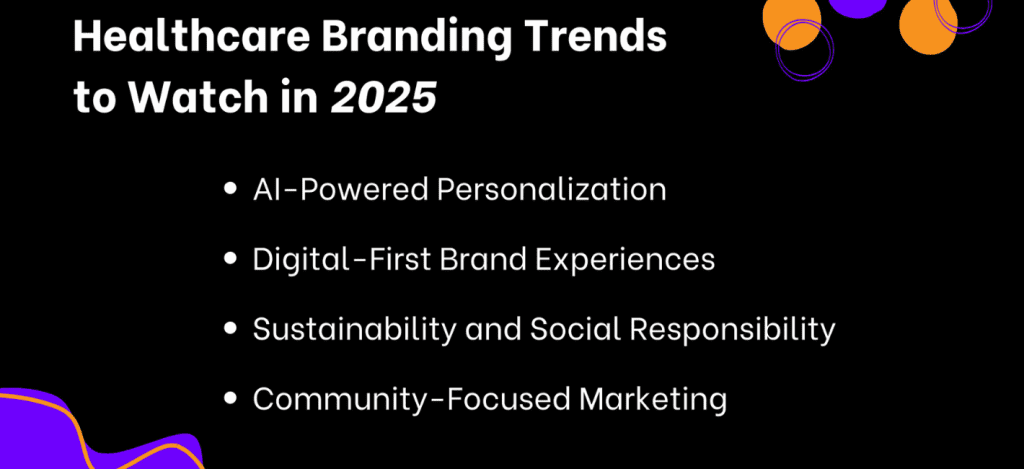
Expert Tips for Building a Healthcare Brand in 2025
Define Your Unique Value Proposition
Every healthcare facility needs to be able to properly explain how it differs from competitors. Instead of quality or caring claims, the value proposition should focus on organizational strengths and patient advantages.
Understanding patient requirements and preferences, analyzing the competitive landscape, and doing an honest assessment of organizational capabilities are all necessary to create a compelling UVP. Target audiences should find the idea specific, believable, and emotionally moving.
Craft Clear, Compassionate Messaging
Clinical accuracy, accessibility, and empathy must all be balanced in healthcare messages. Avoid medical jargon that confuses patients. Rather, choose straightforward language that acknowledges the patient’s feelings and concerns while explaining difficult ideas in words that are easy to understand.
Communication that displays empathy and care for patients is compassionate. In addition to offering comfort and support, it recognizes the anxiety and uncertainty that frequently accompany medical decisions.
Leverage Digital Platforms Strategically
Healthcare brands can reach and engage patients with digital marketing. Patients can find correct information about services and providers thanks to search engine optimization. Healthcare services become trusted health information sources through content marketing and expertise.
Direct patient interaction and community building are made possible by social media platforms, but healthcare organizations still need to respect professional boundaries and comply with privacy laws. Digital strategies should complement brand positioning and reach people where they seek health information.
Monitor and Adapt Brand Performance
Continuous optimization and measurement are necessary for effective healthcare branding. To evaluate brand performance and identify areas for improvement, organizations should analyze brand awareness, patient satisfaction, online reputation, and business outcomes.

Engage with Local Communities
In addition to increasing brand recognition, community involvement shows a dedication to population health. Healthcare providers can fund community events, organize health fairs, provide information, and work with schools and groups.
In addition to offering beneficial community services, such efforts foster a favorable brand image. They create true relationship-building opportunities that boost organizational reputation and patient loyalty.
Common Mistakes to Avoid in Branding for Healthcare
Prioritizing Organization Over Patients
Many healthcare brands ignore the demands of their patients in favor of concentrating too much on their profits and offerings. While clinical skill matters, patients care most about personal benefits.
Instead of emphasizing procedures or organizational characteristics, patient-centered branding changes the focus from “what we do” to “how we help you,” emphasizing results, experiences, and benefits.
Inconsistent Brand Implementation
Healthcare brand inconsistency undermines trust and professionalism. Patients may question organizational reliability and detail when they see different messaging, visuals, or service experiences across touchpoints.
Clear brand rules, employee training, and ongoing monitoring are necessary for consistency in order to guarantee that every patient interaction upholds the desired brand image.
Overly Complex Communication
Healthcare branding may confuse people with technical terminology or complex explanations. Establishing trust and making sure patients are aware of their options and treatment plans depend on clear communication.
Healthcare communication should utilize simple language, explain medical concepts, and provide patients with the information they need to make care decisions.
Neglecting Patient Feedback
Patient reviews offer priceless information about the efficacy and impression of a healthcare brand. Without actively seeking, monitoring, and responding to patient feedback, organizations miss opportunities to improve brand and patient experiences.
Regular feedback collection through surveys, reviews, and direct communication helps organizations understand how patients perceive their brand and identify areas for improvement.
Building Your Healthcare Brand for Success
In 2025, branding for healthcare requires patient-centeredness, strategic thinking, and consistent implementation across all practice touchpoints. Strong brands help companies stand out in competitive markets, create patient relationships, and grow sustainably.
Strong brands enable businesses to stand out in crowded markets, build rapport with patients, and expand sustainably. A strong healthcare brand must blend medical excellence, human connection, technical innovation, and organizational strengths with patient benefits.
Ready to strengthen your healthcare brand? Contact Webugol today to learn how our healthcare branding experts can help you build a brand that resonates with patients and drives organizational success. Our team understands the unique challenges healthcare organizations face and can develop customized branding strategies that meet your specific needs and goals.