



Orthopedic practice SEO: how to rank and get more patients
Orthopedic practice SEO is the process of improving your clinic's visibility in search results so patients find you when they need a surgeon, a second opinion, or post-operative care. It covers keyword research, on-page optimization, local search, and content that answers real patient questions. Done consistently, it brings in qualified patients without the recurring cost of paid advertising.
What does SEO for an orthopedic practice include?
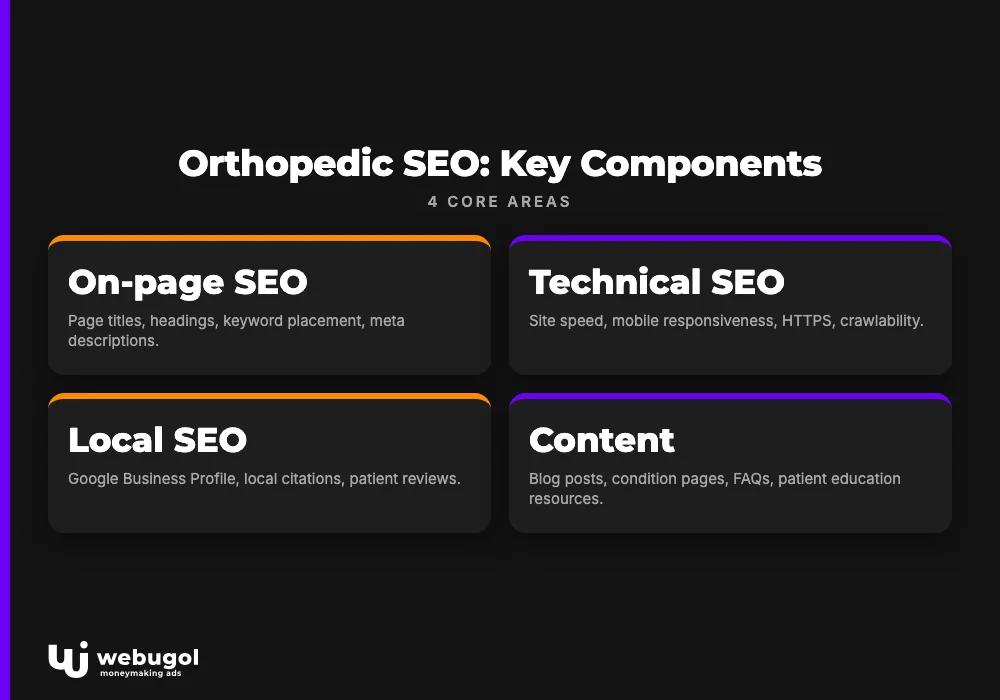
Orthopedic practice SEO includes four core areas that work together: on-page optimization, technical performance, local search, and content. Each layer supports the others. Neglecting one limits the impact of the rest.
| Component | What it covers |
|---|---|
| On-page SEO | Page titles, headings, keyword placement, meta descriptions |
| Technical SEO | Site speed, mobile responsiveness, HTTPS, crawlability |
| Local SEO | Google Business Profile, local citations, patient reviews |
| Content | Blog posts, condition pages, FAQs, patient education resources |
On-page SEO starts with identifying the terms patients actually type. Phrases like "orthopedic surgeon near me," "knee replacement surgeon," or "sports medicine orthopedic" reflect real search intent. Each service page should target one primary phrase and use it naturally in the title, H1, and body copy.
Technical SEO covers what patients don't see but search engines do. A mobile-friendly site matters because most patients search on smartphones. Fast load times reduce bounce rates. Site speed improves when you streamline code, optimize images, and use browser caching. HTTPS is essential: search engines treat secure sites as more credible, and patients trust them more.
Content is where orthopedic digital marketing creates long-term compounding value. Informative blog posts on common conditions, treatment options, and recovery expectations attract patients earlier in the decision process, before they've chosen a provider.
What keywords should orthopedic practices target?
Target keywords that match how patients describe their problem, not how surgeons describe the procedure. "Orthopedic surgeon" and "orthopedic surgery" are the broad anchor terms. Layer in condition-specific phrases such as "ACL reconstruction," "rotator cuff repair," and "hip replacement surgeon," combined with your city or neighborhood.
Geographic modifiers turn broad terms into high-intent queries. "Orthopedic surgeon in [city]" or "knee specialist near [neighborhood]" connects your pages to patients who are geographically ready to book. Local SEO for orthopedic practices depends on matching this geographic intent across your Google Business Profile, website pages, and directory listings.
Voice search follows longer, conversational patterns. Questions like "Who is the best orthopedic surgeon in [city]?" require natural question-and-answer language in your content. Including that language in page copy and FAQ sections captures patients who search by speaking rather than typing.
How does local SEO help orthopedic offices get more patients?
Healthcare local SEO connects your clinic to patients searching within your geographic area. For most orthopedic offices, local search drives the majority of new patient appointments because orthopedic care is location-dependent. Patients don't travel far for an initial consultation.
The foundation is your Google Business Profile. Claim it, complete every field, and keep hours and contact details accurate. Encourage patients who had a positive experience to leave a review, and respond to each one as you would acknowledge a patient in person. Positive reviews influence both rankings and the decision to book.
Local citations matter too. Your practice name, address, and phone number should be consistent across every directory where it appears: Healthgrades, Zocdoc, Yelp, and local business listings. Inconsistencies reduce your local ranking signals and create confusion for potential patients.
For a complete breakdown of what moves the needle in local search for clinic-based businesses, the healthcare local SEO guide for medical practices and clinic websites covers both strategy and execution.
Building authority through content and backlinks
Quality content does two things: it answers patient questions before they call, and it earns links from other sites. Blog posts about common orthopedic conditions, pre- and post-operative expectations, and recovery timelines give patients resources they share and reference.
Patient testimonials and case studies build trust in a way service descriptions cannot. A patient describing their recovery experience is more persuasive than any marketing claim. Publish these with patient authorization and let real outcomes represent your clinic's results.
Long-form resources, such as guides on managing chronic orthopedic conditions or what to expect from surgery, position your clinic as a knowledge leader. These pages tend to earn backlinks from healthcare publications, local news sites, and medical directories. That strengthens your site's authority in search over time.
Backlinks from reputable healthcare and orthopedic industry sites amplify domain credibility. A link from a recognized medical association or hospital network carries significantly more weight than a generic directory listing. Orthopedic website optimization extends beyond your own pages when authoritative sources reference your content.
How long does it take to rank an orthopedic clinic online?
Orthopedic practice SEO is not immediate. Rankings for less competitive, condition-specific terms tend to improve well before broad, high-volume phrases gain traction. Local search rankings often move faster than organic rankings for national terms, which makes local optimization the highest-priority starting point for most practices.
The timeline depends on domain age, the number of quality pages already in place, whether technical issues block indexing, and how active competitors are in your market. A newly launched site in a dense metro area will take longer than an established practice adding fresh content to an existing domain with history.
Tracking progress requires consistent monitoring. Google Analytics shows whether organic traffic is growing over time. Google Search Console reveals which queries your pages appear for, their average position, and click-through rates. Review both tools regularly and shift content priorities based on what is gaining traction.
Video, user experience, and expanding reach
Video content extends your reach in ways text cannot. Virtual office tours, patient interview videos, and procedure explanations build trust and improve engagement metrics on your site. YouTube is the second-largest search engine, and many orthopedic practices have not used it as part of their orthopedic practice SEO approach.
User experience directly affects both rankings and conversion. A well-structured site should let a patient find treatment information, physician profiles, and contact details in seconds. ADA compliance broadens your accessible audience. SEO for medical practices increasingly factors in UX signals, including time on page and click-through rate, as quality indicators.
Social media amplifies content reach and reinforces brand recognition. How social media connects to patient search behavior and orthopedic digital marketing outcomes explains the relationship between social presence and long-term organic visibility.
If you are evaluating outside help, what orthopedic and healthcare practices should expect from a focused search partner outlines the difference between a specialist and a generalist agency.
Start growing your orthopedic practice through search
Orthopedic practice SEO is a long-term investment with compounding returns. Every optimized page, earned review, and published guide builds on the last. The practices that rank consistently treat SEO as part of their patient acquisition system, not a one-time project.
To discuss a plan built around your market and your growth targets, contact the team at Webugol and request a strategy session tailored to your practice.
FAQ
What does orthopedic practice SEO cost?
Costs vary based on market competition, site size, and what infrastructure is already in place. Most practices work with a monthly retainer covering ongoing content, technical maintenance, and local search management rather than a one-time project fee.
Do orthopedic practices need a different SEO strategy than general medical practices?
Yes. Orthopedic SEO targets procedure-specific and anatomy-specific keywords that general medical SEO does not cover. Competition for orthopedic terms in metro markets is also typically higher, which requires a more focused approach to keyword selection and content depth.
How important are patient reviews for orthopedic local search rankings?
Reviews are a primary ranking signal for local search results. A higher volume of positive, recent reviews improves your Google Business Profile's position in map pack results and builds the credibility patients need before booking a specialist.
Can video content help an orthopedic clinic rank higher?
Video hosted on YouTube can appear in both YouTube search and Google search results, giving your practice additional visibility beyond your website. Procedure explanation videos and virtual office tours also reduce patient hesitation, which supports the decision to book an appointment.