



Plastic surgery branding that builds patient trust and drives growth
Plastic surgery branding is the process of shaping how prospective patients perceive your practice before they ever contact you. It covers visual identity, messaging, patient testimonials, and digital presence. Done well, it builds trust and drives inquiries. Results compound over time.
What makes an effective plastic surgery brand?
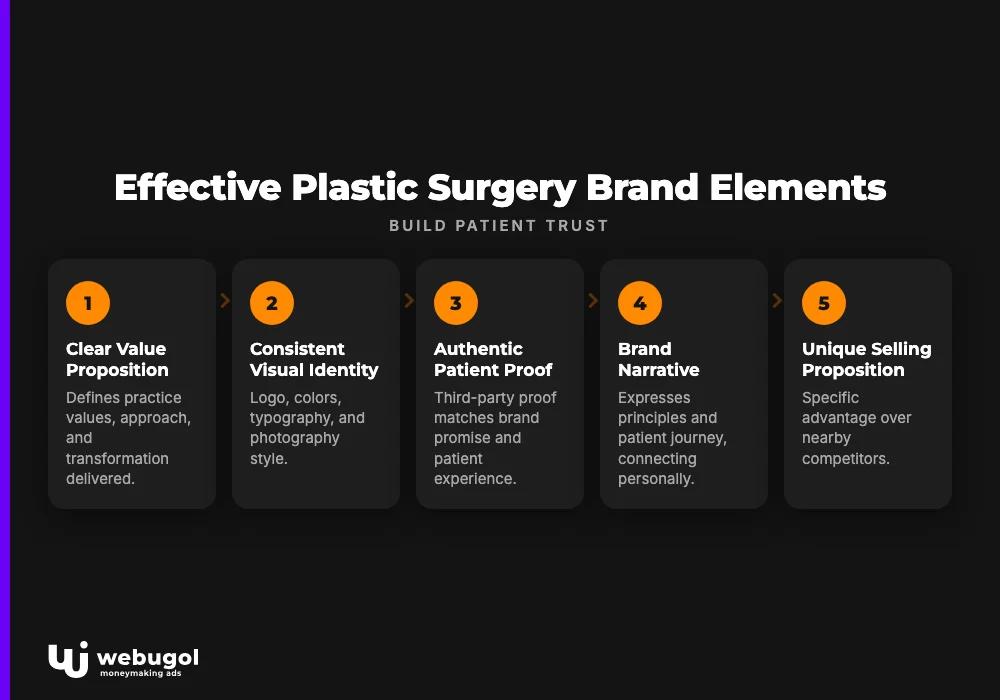
An effective plastic surgery brand rests on three elements working together: a clear value proposition, a consistent visual identity, and authentic patient proof. Without all three, the brand collapses into generic noise that patients cannot distinguish from a competitor's.
The core components of a strong cosmetic practice brand are:
| Element | What it does |
|---|---|
| Brand narrative | Defines the practice's values, approach, and the transformation it delivers |
| Visual identity | Logo, color palette, typography, and photography style |
| Tone of voice | How the practice communicates across every channel |
| Patient testimonials | Third-party proof that the brand promise matches the patient's experience |
| Unique selling proposition | The specific advantage this practice holds over nearby competitors |
Brand narrative goes beyond advertising. It expresses the practice's principles and the patient journey in a way that connects at a personal level. Patients making cosmetic surgery decisions are evaluating trust, not just capability. A clear, honest narrative makes the practice feel approachable rather than transactional. Strategic plastic surgery branding that balances visual choices, real patient stories, and a sharp unique selling proposition increases both initial inquiries and long-term retention. This applies equally to a boutique practice developing its medical spa brand identity as it does to a high-volume surgical center.
How do I brand my plastic surgery practice?
Start with your market. Understanding what competitors offer and what target patients want is the first step in any cosmetic practice marketing strategy. Study direct rivals, identify what they do not cover, and use that data to craft messages that connect with the patients most likely to convert.
Building your plastic surgery branding foundation
From there, build outward with these practical steps:
- Define your positioning. Decide what your practice stands for and who it serves best. A boutique medical spa brand identity differs structurally from a high-volume surgical center. Neither is wrong; unclear positioning is.
- Standardize your visual language. Consistent logo, typography, and photography across your website, social profiles, and printed materials signal professionalism at every touchpoint.
- Develop a content voice. Whether clinical and precise or warm and conversational, that voice must be consistent in every blog post, email, and caption.
- Collect and publish patient stories. Authentic testimonials and before-and-after galleries are the strongest proof elements in surgeon digital marketing.
- Audit quarterly. Patient preferences shift. Review your messaging at least every quarter and update what no longer reflects your current practice.
Healthcare clinic branding succeeds when it is consistently maintained, not launched once and left static.
How does branding build patient trust in cosmetic surgery?
Trust is the bottleneck. Patients research multiple practices, compare reviews, and evaluate digital presence long before they book a consultation. Plastic surgery branding creates visible trust signals at every stage of that process.
Ethical marketing is a core requirement here. Avoid overstating results. Ensure before-and-after photos are accurate and representative of realistic outcomes. Protect patient privacy across all digital touchpoints. Practices that address these commitments directly in their content and consultations build a reputation as a patient-centered institution, not a sales operation.
Patient testimonials do significant work. Real stories make the practice credible and give prospective patients narratives they can identify with. Encouraging satisfied patients to share experiences on review platforms and social channels compounds this effect over time. A steady stream of authentic reviews is one of the most durable assets in cosmetic surgery marketing.
Community engagement extends trust beyond the consultation room. Active social media groups, patient forums, and community events create a network where satisfied patients refer new ones. This involvement demonstrates that the practice cares about patient outcomes rather than procedure volume alone.
What digital marketing channels work best for plastic surgeons?
Surgeon digital marketing runs across several channels simultaneously. The right mix depends on budget, local competition, and target demographics, but some channels consistently outperform others in cosmetic contexts.
Website. A well-designed website anchors plastic surgery online presence. It should present services clearly, display before-and-after results, and make consultation booking straightforward. An SEO-optimized site ranks in organic search when patients look for cosmetic procedures in your area. For practices investing in long-term search visibility, the guide to how organic search compounds visibility for cosmetic practices outlines a structured approach.
SEO. Ranking in organic search results for cosmetic procedures in your local market is the highest-ROI channel for most practices. Patients who find you through search are already qualified; they are actively looking for what you offer.
Content marketing. Blog posts, procedure explainer videos, and social content that demystifies cosmetic treatments reduce patient anxiety and build credibility. Beyond attracting new visitors, this positions the surgeon as an authority, which shortens the decision cycle.
Social media. Platforms like Instagram are highly effective for before-and-after content and patient story formats. Organic social builds community; paid social targets specific demographics and procedure types. Understanding how patients evaluate cosmetic practices through social channels can help practices allocate their social budget more precisely.
Email. Post-consultation nurture sequences and patient retention campaigns keep the practice top of mind. Email is effective for re-engaging past patients for complementary or additional procedures.
Emerging tools. Augmented reality procedure previews, virtual consultations, and AI-assisted treatment planning are real options for practices with the budget to invest. These tools improve the patient experience and signal a forward-looking brand that standard cosmetic surgery marketing cannot match.
How to differentiate a plastic surgery practice from competitors online?
Differentiation in plastic surgery branding comes from specificity, not volume. Practices that try to appeal to everyone end up standing out to no one.
Choose a lane. A practice specializing in facial rejuvenation for patients over 50 has a clearer brand story than one that lists every available procedure without context. Specificity sharpens messaging, improves conversion rates, and attracts patients who are the right fit for what the practice does best.
Stay current. Cosmetic surgery introduces new techniques and devices regularly. A cosmetic practice marketing strategy that highlights current technology and ongoing surgeon training signals that the practice is not resting on past credentials. Patients research thoroughly; outdated content signals a stale practice.
Invest in visual proof. High-quality before-and-after photography and video walkthroughs of the patient experience are hard to replicate at scale. A competitor can copy your service list. They cannot copy ten years of documented patient results.
Build a referral engine. Satisfied patients who feel connected to a practice community refer friends and family. Word-of-mouth costs a fraction of paid acquisition and carries more credibility with prospective patients.
Monitor competitors consistently. Track what nearby practices publish, how they position themselves, and which channels they invest in. Gap analysis should inform your branding decisions on a quarterly basis, not only at launch.
Strengthen your plastic surgery brand with the right partner
Webugol works with cosmetic practices to develop plastic surgery branding strategies specific to their market, their patients, and their growth goals. If your current marketing generates traffic but not trust, or inquiries but not the right patients, the brand strategy is likely the gap.
Our healthcare growth system gives practices a structured path from brand foundation to full digital presence. Reach out to start a branding and cosmetic surgery marketing audit for your practice.
FAQ
What is plastic surgery branding?
Plastic surgery branding is the strategic process of defining a cosmetic practice's identity, values, visual language, and patient communication style. It covers everything a prospective patient encounters from a Google search to a post-procedure follow-up. Consistent branding across all touchpoints builds recognition and patient trust.
How long does it take to build a recognizable cosmetic practice brand?
Building a recognizable cosmetic practice brand typically takes six to twelve months of consistent execution across your website, social channels, and patient communications. Initial changes such as refreshed visuals and updated messaging show results sooner, but deep local recognition requires sustained effort. Consistency matters more than speed.
Does plastic surgery branding affect patient retention?
Yes. A strong brand identity makes patients feel connected to a practice rather than completing a one-time transaction. Consistent follow-up communication, a clear practice voice, and community presence all contribute to higher retention rates and more patient referrals. Healthcare clinic branding directly influences whether patients return for future procedures.
What is the difference between branding and marketing for plastic surgeons?
Branding defines what your practice is, what it stands for, and how it communicates. Marketing distributes that identity to your target audience. Surgeon digital marketing is most effective when it amplifies a clear, consistent brand; marketing without a defined brand generates traffic that does not convert.
How important is online presence for a cosmetic practice?
A cosmetic practice's online presence is where most patients form their first impression. A well-built website, active social profiles, and consistent review management are foundational. Practices with a weak plastic surgery online presence lose patients to competitors before a consultation is ever considered.