



Digital Marketing for Steel Companies: Strategies That Drive Real B2B Growth
Digital marketing for steel is how manufacturers, distributors, and suppliers attract qualified buyers, build authority in competitive markets, and grow revenue beyond referrals. A focused strategy combines SEO, content, paid campaigns, and email to reach procurement managers and engineers at the moment they search. Convert that visibility into long-term partnerships. This guide covers the channels and tactics that produce measurable results for steel businesses.
What digital marketing channels work best for B2B steel businesses?
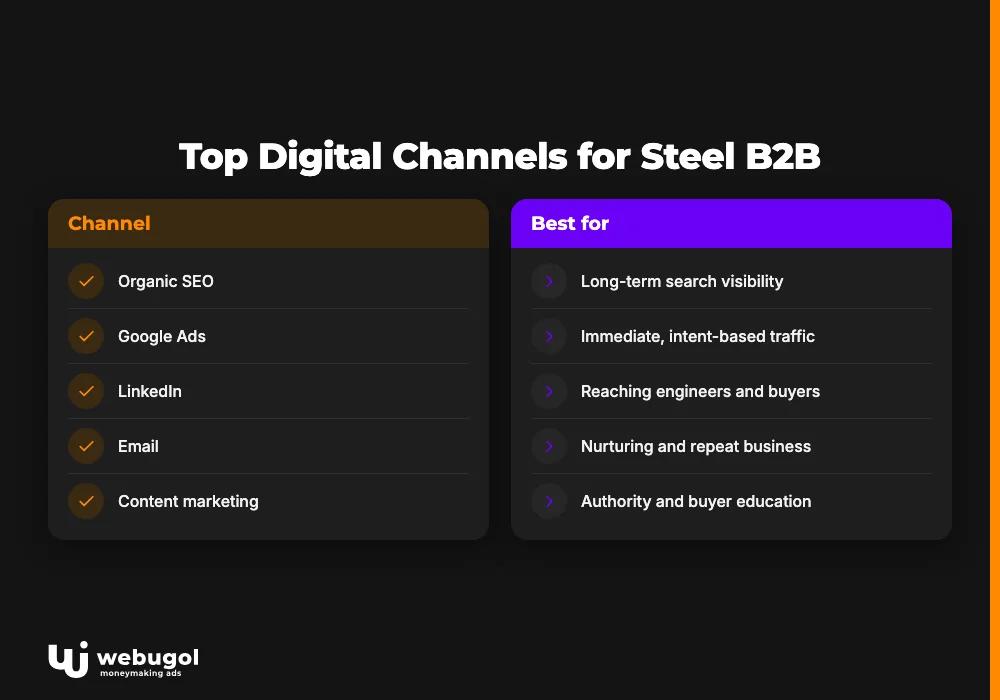
The most effective channels for B2B steel businesses are organic search, Google Ads, LinkedIn, email, and content marketing. Each addresses a different stage of the buying cycle. Procurement teams typically research suppliers online before making first contact, so visibility across multiple touchpoints matters.
| Channel | Primary use | Best for |
|---|---|---|
| Organic SEO | Long-term search visibility | Steel company SEO strategy |
| Google Ads | Immediate, intent-based traffic | Steel industry lead generation |
| Reaching engineers and buyers | B2B marketing for steel companies | |
| Nurturing and repeat business | Existing contacts and warm leads | |
| Content marketing | Authority and buyer education | Content marketing for metal companies |
Most steel manufacturers start with SEO and one paid channel, then add email and content as the pipeline matures. The right mix depends on sales cycle length, budget, and how well your current website converts visitors into inquiries.
How to generate leads for a steel company online?
Steel industry lead generation online combines search visibility, a credible website, and consistent follow-up. Start with the website: it needs complete product specifications, downloadable technical documentation, and a clear RFQ form. Buyers who cannot find what they need quickly move to a competitor.
Search captures the top of the funnel. A steel company SEO strategy built around product-specific terms and long-tail queries reaches buyers at the moment they have a defined need. Google Ads campaigns for steel manufacturers add speed by placing your company in front of high-intent searches immediately, while organic rankings compound over months.
LinkedIn strengthens your steel manufacturer online presence beyond search. Sponsored content and InMail reach procurement directors at fabricators, construction firms, and OEMs who may never find you through organic search alone. Target by job title and industry to minimize wasted spend.
Retargeting ties these channels together. Buyers who visited your site without converting are already familiar with your company. A timely ad featuring a relevant product or case study brings them back into the conversation.
Why is SEO important for steel industry websites?
SEO determines whether your company or a competitor appears when buyers search for suppliers. Most B2B purchasing decisions begin with a search query. If your site is not visible for the terms your buyers use, those leads go elsewhere.
An effective digital marketing for steel program requires visibility across multiple fronts. On-page work is the foundation. It aligns page titles, headings, and product descriptions with the exact phrases buyers use in search. Technical SEO then ensures fast load times and a clean site structure that search engines can fully index. Link building from industry directories, trade publications, and supplier networks raises domain authority over time.
Local SEO matters for regional distributors and fabricators. Adding location-specific terms to key pages and maintaining accurate business listings helps procurement teams find nearby suppliers when lead time and logistics are deciding factors.
Mobile optimization is essential. Industrial professionals now conduct much of their research on mobile devices. A site that loads slowly or renders poorly on a phone loses both rankings and conversions.
What content strategy works for steel and metalwork companies?
Content marketing for metal companies works when it addresses the specific technical questions buyers are already researching. Case studies showing how a custom steel solution solved a structural or fabrication challenge outperform generic capability pages. Alloy comparison guides, technical specification sheets, and process explainers attract engineers doing pre-purchase research.
The principle is direct. Write about the problems your buyers solve using your products, not about how capable your company is. A detailed guide on selecting structural steel grades for high-load applications draws the exact buyer who needs that product, at the moment they need it.
Video reinforces this approach. Virtual plant tours and production process videos build credibility with buyers who cannot visit your facility. They answer the core question every large buyer has: can this supplier actually deliver at scale and to specification?
Consistency outweighs volume. Two well-researched pieces per month, tied to real buyer questions and supported by internal data or customer results, outperform ten thin posts.
Building a high-converting website for steel manufacturers
The website is where every channel converges. All SEO rankings, paid clicks, and LinkedIn impressions come down to one question: does this page make a qualified buyer want to take the next step?
A steel manufacturer's site needs these fundamentals:
- Complete product catalog with full specifications: Include dimensions, grades, certifications, and tolerances. Buyers will not call to ask for information that should already be on the page.
- Technical documentation downloads: Datasheets, test certificates, and compliance documents reduce friction for procurement teams running due diligence.
- Customer case studies with named clients: Social proof from identifiable companies in real industries is far more persuasive than general capability claims.
- Clear calls to action on every page: An RFQ button or quote request form reduces the steps between interest and first contact.
- Fast load times and mobile responsiveness: A slow site hurts search rankings and conversions at the same time.
Working with an industrial marketing agency to build or rebuild a site around these foundations can accelerate results significantly when in-house resources are limited.
Social media for steel and metalwork companies
LinkedIn is the most productive social platform for social media marketing for industrial companies. It connects metalwork company marketing teams directly with engineers, project managers, and procurement directors. Share production updates, project completions, and industry commentary. Engage in professional groups where your buyers are already active.
Instagram works for visual storytelling: large-scale installations, finished fabrications, and behind-the-scenes production content. It builds brand recognition and supports recruiting, though direct B2B leads from Instagram are limited compared to LinkedIn.
One channel done well beats four channels done poorly.
Email marketing and lead nurturing for steel companies
Email marketing delivers strong ROI in B2B marketing for steel companies because it converts existing relationships into repeat business. Buyers who have already worked with you, or who downloaded a technical guide, are far closer to a purchase than any cold prospect.
Automated drip campaigns keep your company visible without manual follow-up. A sequence that delivers a case study, then a product update, then a quote request invitation runs in the background while your sales team handles active deals.
Segment by buyer type. A structural contractor has different priorities than an OEM manufacturer. Targeted messages that address each segment's specific concerns produce better open rates and conversions than broadcast emails. Track those metrics and refine over time.
Start your digital marketing for steel strategy today
A structured digital marketing for steel plan moves companies from reactive selling to consistent pipeline generation. SEO, content, paid advertising, and email each play a distinct role. Together, they build the online presence that serious buyers expect before considering a new supplier.
Webugol works with manufacturers and distributors to build strategies around specific products, customers, and sales cycles. Contact us to discuss a plan built for your steel business.
FAQ
How long does digital marketing take to generate leads for a steel company?
Paid search campaigns can drive inquiries within days of launch. SEO typically takes three to six months to produce consistent organic leads. A combined approach shortens the ramp-up time by capturing immediate traffic through paid channels while organic rankings build in parallel.
What makes content marketing effective for metalwork companies?
Technical content that answers real buyer questions, such as alloy selection guides or fabrication process explainers, outperforms generic company descriptions. Buyers conduct detailed research before contacting a supplier, and content that addresses that research builds the credibility that earns the inquiry.
Which social media platform works best for B2B steel businesses?
LinkedIn is the most effective platform for reaching procurement managers, engineers, and operations directors in steel and fabrication. It allows targeting by job title, company size, and industry in a way other platforms cannot match for B2B purposes.
Is digital marketing cost-effective for small steel manufacturers?
Yes. Digital channels allow precise targeting by product, region, and buyer type, which reduces wasted spend compared to traditional advertising. SEO and content marketing generate compounding returns over time as rankings and authority accumulate.
What should a steel company website include for better lead generation?
The site needs detailed product specifications, downloadable technical documents, case studies from named clients, and a clear RFQ process on every product page. Buyers who cannot find complete information will move to a competitor without making contact.