



Medical device marketing: how inbound strategy triples your leads
Medical device marketing works best when it pulls qualified buyers toward you rather than pushing messages at them. An inbound marketing strategy positions your brand in front of clinicians, procurement officers, and health system administrators during the months they spend researching before any purchase commitment. Companies that build this system generate more qualified leads, forge stronger relationships with decision-makers, and lower their cost per acquisition compared to trade shows and cold outreach combined.
What is inbound marketing for medical devices?
Inbound marketing for medical devices is a structured methodology that replaces cold calls and conference booths with educational content, organic search visibility, and systematic lead nurturing. The logic is straightforward: medical device purchases involve multiple stakeholders, demand clinical evidence, and take months or longer to complete. Buyers do most of that research before speaking to any vendor.
Traditional outbound tactics have lost ground for a simple reason. Internet research replaced them. Before calling a sales representative, a hospital procurement team has already read clinical comparisons, watched product demonstrations, and reviewed competitive white papers. Medical device marketing that ignores this shift reaches buyers too late, or not at all.
The inbound model works in four connected phases. First, attract the right audience with content that ranks in search and circulates in professional networks. Second, convert traffic into leads through gated resources and clear calls to action. Third, nurture those leads through a long buying cycle with segmented messaging. Fourth, retain customers and convert them into clinical advocates who share their experience with colleagues. Each phase requires a different set of tactics, but all of them depend on a consistent investment in B2B healthcare content.
What are the best medical device marketing strategies?
The most effective medical device marketing strategies combine content authority, search visibility, and direct relationship channels into a coordinated system that drives healthcare lead generation across the full buyer journey. No single tactic carries the full load. The combination below covers buyers from first awareness through the final purchase decision.
Building accurate buyer personas first
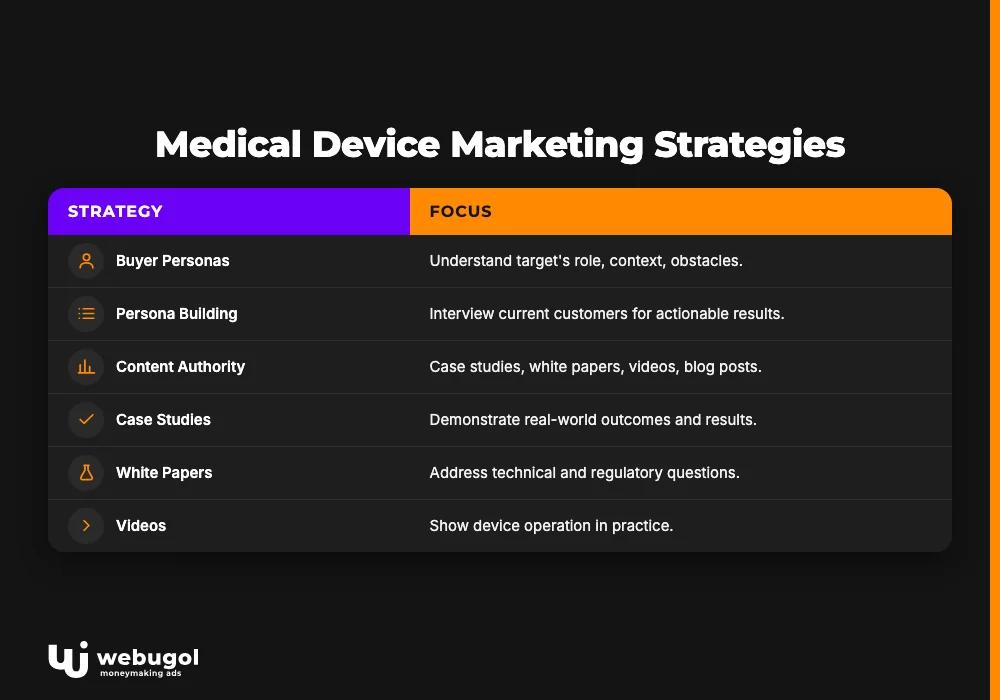
Every content decision depends on who you are trying to reach. Job title alone is not enough. A buyer persona for medical device marketing documents the target's role, clinical or operational context, and the specific obstacles they face daily. A hospital procurement officer prioritizes cost-efficiency and vendor reliability. A practicing surgeon cares about clinical outcomes and ease of use. A biomedical engineer focuses on system integration and maintenance burden. These are three different conversations, and they require three different content approaches.
Building personas from interviews with current customers produces more actionable results than filling templates with assumptions. Once documented, they drive every decision: topics, format, language, and which objections to address first.
B2B healthcare content that builds authority
The most effective B2B healthcare content formats for medical device companies are case studies, clinical white papers, how-to videos, and instructional blog posts. Each format serves a distinct purpose at a different stage of the buying cycle.
Case studies demonstrate real-world outcomes with named institutions or measurable results. White papers address the technical and regulatory questions that clinical committees raise before any purchase decision. Videos show how a device operates in practice, communicating what written descriptions cannot. Blog posts capture organic search traffic and introduce the brand to buyers who did not yet know they needed your solution.
A content calendar keeps publishing consistent. This matters because search algorithms reward sites that regularly add relevant, authoritative content, and because buyers who encounter your brand multiple times during their research are far more likely to engage when they are ready to act.
| Content format | Primary purpose | Buyer stage |
|---|---|---|
| Instructional blog posts | Search visibility, brand awareness | Awareness |
| Clinical white papers | Technical credibility, regulatory context | Consideration |
| Case studies | Proof of outcomes | Decision |
| How-to videos | Product understanding, trust-building | All stages |
| Webinars | Live engagement, direct relationship | Consideration / Decision |
Medical device SEO: ranking where buyers research
Medical device SEO starts with understanding what buyers actually search for, then building content that answers those queries more completely than any competitor. Keyword research specific to the medical device category identifies terms that procurement officers, clinical specialists, and biomedical engineers use. Those terms often differ significantly from the language companies use internally to describe their own products.
On-page optimization covers the structural elements that help search engines understand and rank a page: title tags, header structure, meta descriptions, and internal linking. Off-page factors, primarily links from credible medical and industry sources, signal authority and trust. Both are necessary. A technically optimized page with no external links will underperform its potential. A heavily linked page with poor on-page structure will leave ranking power unrealized.
Healthcare digital marketing teams that treat SEO as a one-time setup consistently underinvest in it. How inbound SEO compounds over time for healthcare companies is one of the clearest arguments for sustained commitment: search algorithms update, competitors publish new content, and buyer language shifts with regulatory cycles. Sustained effort builds authority in ways that paid advertising simply does not.
Social media engagement for professional audiences
LinkedIn, Facebook, and Twitter each provide different access to the medical device audience. LinkedIn reaches clinicians, biomedical engineers, and procurement professionals directly through profiles and industry groups. Facebook and Twitter extend reach to patient advocacy communities and secondary influencers who shape institutional purchasing decisions.
Effective social engagement requires consistent posting and prompt responses to comments and messages. Content that highlights product advantages, clinical success stories, and educational material consistently outperforms promotional announcements with this audience. Social media shapes how patients and healthcare professionals engage with device manufacturers at every stage of the research process, which means a weak or inconsistent social presence has measurable consequences on lead volume.
How to generate leads for medical devices?
Healthcare lead generation in the medical device sector requires tactics calibrated to long, relationship-driven sales cycles. The goal at each stage is not immediate conversion. It is sustained visibility and credibility that earn the next step in the conversation.
Email marketing and segmented nurturing
Email is the most direct channel for guiding medical device prospects through the buyer's journey. Its effectiveness depends almost entirely on segmentation. A single, unsegmented list used as a broadcast channel produces low open rates and minimal conversions.
Segmented lists, organized by job role, stage in the buying cycle, or expressed content interest, allow for messaging that addresses specific concerns at the right moment. Automated workflows make this scalable. When a prospect downloads a white paper, a workflow can deliver a related case study two days later, then a webinar invitation a week after that. Each touchpoint adds value without requiring manual intervention from the marketing team. Building a structured email program for healthcare lead nurturing reduces time to conversion while maintaining the relationship quality that complex, multi-stakeholder sales require.
Webinars and online workshops
Webinars are among the highest-converting formats in medical device marketing. They allow companies to demonstrate product functionality, share clinical evidence, and answer questions in real time. That combination of depth and live interaction builds credibility that static content alone cannot achieve.
Recording and repurposing webinar content extends its return considerably. One hour of live content becomes a library of short clips for social media, a source for follow-up blog posts, and an on-demand resource for prospects who find the brand after the live event. The production investment pays dividends for months.
Video content for complex mechanisms
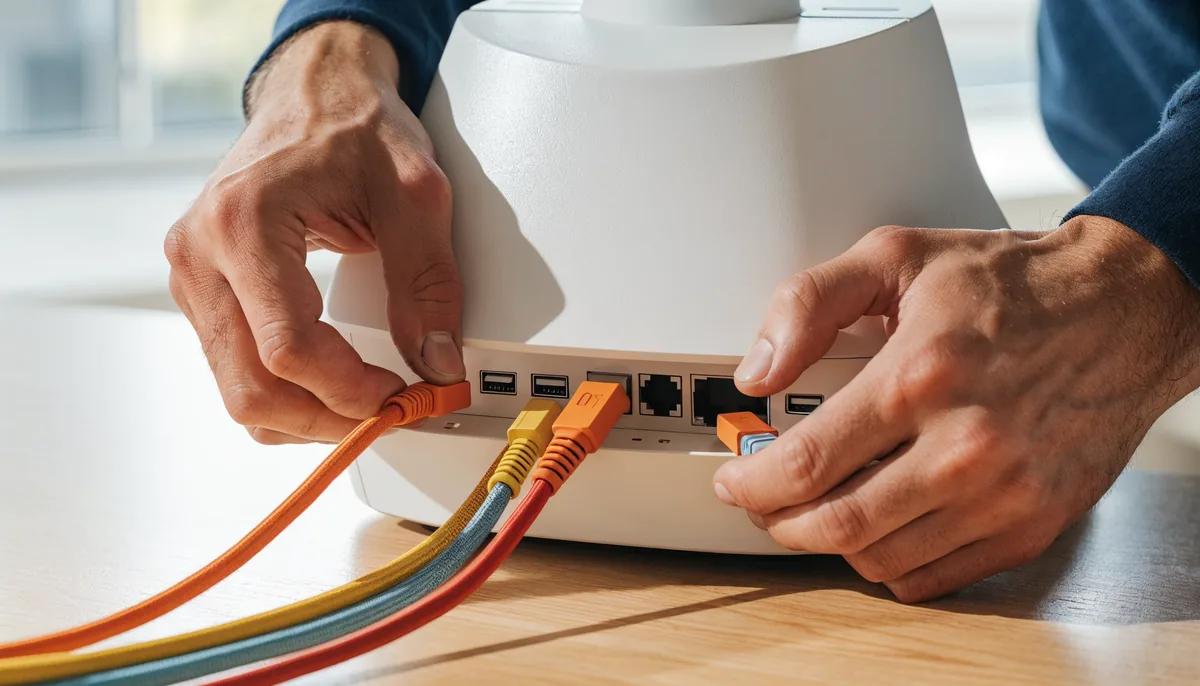
Medical devices often involve mechanisms and clinical workflows that written descriptions fail to convey fully. Video bridges that gap. Product demonstrations, mechanism animations, and clinician testimonials communicate information at retention rates far higher than text alone.
Video also benefits from shareability. A product demonstration that a clinical champion forwards to colleagues and administrators inside a target institution can reach five to ten internal decision-makers without any additional marketing spend. For committee-driven purchasing processes, that internal distribution is often what tips the decision.
Marketing automation across the full funnel
Marketing automation connects every channel into a cohesive inbound marketing strategy. Automation platforms track how prospects interact with emails, website content, social posts, and webinar registrations, then use that behavioral data to deliver the most relevant next touchpoint.
Lead handling from first contact to sales handoff is simplified when automation manages the sequencing. Sales teams receive leads that have already been educated and qualified through content. That reduces wasted conversations and shortens the overall cycle. Platforms like HubSpot integrate CRM data with marketing activity, giving every team member visibility into how each prospect has engaged before any direct conversation begins.
How does SEO help medical device companies?
Medical device SEO increases organic visibility in search results, putting your content in front of clinicians and procurement teams who are actively researching solutions in your category. That organic traffic carries higher purchase intent than most paid sources. Someone searching for a specific device category or clinical application is often already deep into a buying cycle.
SEO also builds durable authority. A page that earns a top ranking for a high-value query continues generating leads without incremental cost. Paid advertising stops the moment the budget does. Organic rankings compound.
For medical device companies specifically, SEO creates two advantages that no other channel replicates. First, it builds credibility with clinicians who are trained to evaluate sources critically and who distrust overt advertising. Appearing alongside clinical resources and peer-reviewed publications in organic results signals legitimacy that no ad placement can match. Second, it generates data about how buyers think and what concerns they carry at each stage, which improves every other element of the healthcare digital marketing program.
Local and regional SEO is often underused by medical device companies targeting specific health systems or geographic markets. Ranking in local search for procurement teams and clinical buyers in target regions can determine whether you are discovered before a competitor or missed entirely.

How to measure medical device marketing ROI?
Medical device marketing ROI is measured through traffic analytics, lead conversion data, and pipeline contribution metrics. Platforms like HubSpot and Google Analytics provide visibility into website traffic, lead conversion rates, and content performance. CRM integration connects marketing activity to closed revenue, which is the only measurement that ultimately matters.
The challenge specific to medical device marketing is that sales cycles can stretch across months or years. Attribution across that timeline requires tracking every touchpoint from first website visit to signed contract. Without that infrastructure in place, marketing budgets read as a cost center rather than a revenue driver. That misperception makes them the first target when companies cut spending.
Conversion rate optimization
Conversion rate optimization (CRO) increases the proportion of visitors who complete a desired action: filling out a contact form, registering for a webinar, or downloading a white paper. Heatmaps, A/B tests, and session recordings reveal where visitors abandon the process and which changes improve completion rates.
Simpler navigation, faster page load speeds, and clearly placed calls to action consistently improve performance across healthcare digital marketing programs. Small gains compound. A 20% lift on a high-traffic landing page can double annual lead volume from that page without increasing traffic at all.
A/B testing and continuous refinement
A/B testing compares two versions of a page, email, or ad to determine which performs better on a specific metric. In medical device marketing, A/B tests deliver the most value for landing pages tied to gated content offers, subject lines on nurture emails, and call-to-action placement on product pages.
Tracking click-through rates, engagement, and conversions across tests builds a body of knowledge about what works for your specific audience. That accumulated knowledge makes each subsequent campaign more effective than the last. Testing regularly is what separates programs that improve over time from those that plateau.
Acting on customer feedback
Surveys, focus groups, and interviews with current customers surface needs and objections that quantitative data alone cannot reveal. In medical device marketing, this qualitative input is especially valuable because purchasing decisions involve clinical judgment, institutional dynamics, and regulatory constraints that web analytics cannot capture.
Incorporating customer feedback into content strategy ensures that topics reflect actual buyer concerns rather than internal assumptions. This raises content engagement, improves lead quality, and gives sales teams stronger material for later-stage conversations.
Ready to grow your medical device pipeline?
Effective medical device marketing requires a coordinated inbound marketing strategy across content, SEO, email, and automation. Building that system from scratch is demanding. Maintaining and optimizing it while managing a product business is a full-time investment that most in-house teams cannot sustain without outside support.
Webugol's healthcare growth system brings together the strategy, content production, and technical execution that medical device companies need to attract qualified leads and convert them into customers. Our team has built programs that tripled lead acquisition for clients in the medical device sector using the same methodology described in this article. If you want to see what a structured inbound program could do for your pipeline, contact the team at Webugol to start the conversation.
FAQ
What is inbound marketing for medical devices?
Inbound marketing for medical devices is a methodology that attracts buyers through educational content, SEO, and structured lead nurturing rather than cold calls or interruptive advertising. It is designed for the long, multi-stakeholder sales cycles common in medical device purchasing. The goal is to become the trusted resource that decision-makers return to throughout their research process.
How do you generate leads for medical devices?
Medical device lead generation combines segmented email nurturing, webinars, gated content such as white papers, and marketing automation to guide prospects through extended buying cycles. Each tactic keeps the brand visible and credible at different stages of the decision process. Automation allows this to scale without proportional growth in team size.
What are the best medical device marketing strategies?
The strongest strategies integrate B2B healthcare content, medical device SEO, segmented email nurturing, and social media engagement into a coordinated system. Buyer personas determine what content to produce, SEO ensures it appears where buyers search, and automation delivers it to the right people at the right time. No single channel carries the full weight on its own.
How does SEO help medical device companies?
Medical device SEO increases organic search visibility so that clinicians and procurement teams find your content when actively researching solutions. It builds long-term authority and generates qualified leads without ongoing ad spend. Search data also reveals how buyers think, which improves every other element of the marketing program.
How do you measure medical device marketing ROI?
ROI is measured by connecting marketing activity to pipeline and closed revenue through integrated CRM and analytics platforms such as HubSpot and Google Analytics. Key metrics include lead conversion rates, cost per qualified lead, and pipeline contribution by channel. Long sales cycles require full-funnel attribution from first touch to contract to produce an accurate picture.