



AI tools for SEO: a practical selection guide for 2026
AI tools for SEO are software platforms that apply machine learning and natural language processing to keyword research, content scoring, and technical site analysis. They eliminate manual tasks that previously consumed hours of work each week. The right stack processes ranking data at a scale no human team can match, and the strongest tools sharpen their recommendations as they ingest more signals over time.
This guide covers which tools deliver real results across the three core categories, how each one works in practice, and how to fit them into an existing workflow without disrupting what's already performing.
What are the best AI tools for SEO in 2026?
The strongest AI tools for SEO fall into three functional areas: keyword research automation, SEO content optimization, and technical SEO automation. No single platform leads across all three. Below is a direct comparison of the nine tools this guide covers.
| Tool | Category | Primary strength |
|---|---|---|
| SE Ranking | Keyword research | Trend analysis and competitor tracking |
| Ahrefs AI Content Helper | Keyword research | Missed keyword discovery and search intent mapping |
| Jasper | Content creation | Long-form SEO content at brand-consistent scale |
| Writesonic | Content optimization | SEO-templated copy with built-in plagiarism check |
| Frase | Content briefs | Competitive content gap analysis |
| Surfer SEO | On-page optimization | Data-driven keyword density and semantic scoring |
| AlliAI | Technical SEO | Bulk meta tag and site structure automation |
| SiteW | Technical SEO | Automated speed and mobile optimization at build |
| Rankscale | AI search visibility | Brand tracking in AI-generated search results |
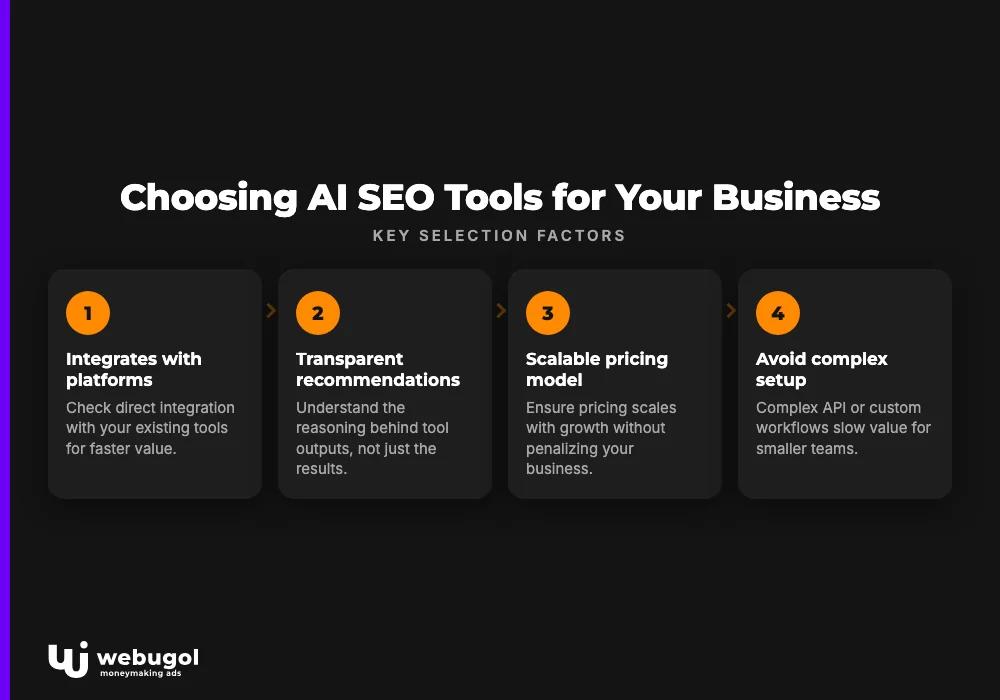
Choosing from this list is a function of where your team loses the most time to manual work. Three factors matter most in selection: how directly a tool integrates with your existing platforms, how transparent its recommendations are (meaning you can understand the reasoning, not just the output), and whether the pricing model scales without penalizing growth. Tools that require complex API setup or custom workflows are slower to deliver value for smaller teams.
Which AI tool is best for keyword research?
For keyword research automation, two tools stand apart. SE Ranking combines search volume data with machine learning analysis of competition levels, seasonal shifts, and trend movements across a keyword set. Teams that need continuous monitoring of keyword performance alongside competitor tracking in one platform find it particularly useful.
Ahrefs AI Content Helper works differently. It examines content you have already published and surfaces keywords you missed, then adds search intent analysis that shows not just what people search but why. That distinction is practically significant: a keyword with strong volume but mismatched intent rarely produces ranking progress regardless of how well the page is written.
If your bottleneck is building a keyword list from scratch, SE Ranking is the stronger starting point. If you have pages that are not ranking despite covering the topic, Ahrefs AI Content Helper is better suited for identifying what those pages are missing at the intent and keyword level.
How does AI improve website search rankings?
AI does not push rankings up directly. It improves the relevance and structure of your content and site, and those improvements change how search algorithms evaluate your pages.
Machine learning rankings work by detecting statistical correlations across massive datasets. AI SEO tools surface those correlations on your side, letting you see patterns in ranking data that would take weeks to find manually.
Surfer SEO, which according to its documentation analyzes over 500 ranking factors, benchmarks your page against current top results and identifies gaps in keyword usage, content length, and semantic coverage. Closing those gaps gives algorithms clearer ranking signals.
Search intent analysis is where the gains become more durable. When an AI tool correctly maps the intent behind a query, whether informational, navigational, or transactional, it helps you structure content around what users actually expect to find. A page that covers the topic thoroughly but is optimized for the wrong intent will rarely sustain strong rankings, no matter how technically clean the page is.
The effects compound. Stronger keyword relevance raises topical authority signals. Better semantic coverage supports broader query matching. A structured ongoing SEO audit cycle catches technical regressions before they undo the progress content improvements created. These are not independent wins. Each reinforces the others, and the compounding effect separates teams that use AI strategically from those that use it tactically.
Using AI tools for SEO content optimization
Content optimization software like Jasper, Writesonic, and Frase each address the writing-and-research problem from a distinct angle. Understanding what makes each one different is more useful than treating them as interchangeable options.
Jasper focuses on generation at scale. It creates blog drafts, meta descriptions, and product copy while preserving a brand voice the user configures. Keyword research integrates into its generation process directly. The output is grounded in real ranking targets rather than produced in a vacuum. It cuts production time substantially, though a human editorial review before publishing remains mandatory.
Writesonic offers SEO-specific templates for blog posts, landing pages, and ad copy. A built-in plagiarism detector checks content uniqueness before publication. The platform provides real-time insights that show how specific content changes are expected to affect search performance, which helps writers prioritize which edits matter most.
Frase takes a research-first approach. It pulls the top-ranking pages for your target keyword, analyzes what they cover and how they are structured, then generates a content brief that maps what your page needs to be competitive. For long-form content where topical depth drives rankings, this is often the fastest path from a weak-performing page to one that climbs.
None of these content optimization tools produce publish-ready material independently. They solve the blank-page problem and give writers a structured starting point anchored in real ranking data. The strongest results come when a writer who understands the brand, the audience, and the subject takes the AI draft and develops it into something with genuine editorial perspective.
Technical SEO automation: audits, speed, and structure
Technical SEO automation addresses the site-level problems that prevent strong content from ranking. These tools do work at a scale and speed that manual auditing cannot approach.
AlliAI operates across entire sites at once. It generates meta tags, optimizes image attributes, and restructures URL patterns across thousands of pages simultaneously. Teams can push these changes without a developer, which matters when an algorithm update requires a rapid response and engineering resources are limited.
Its collaboration features let multiple team members track project progress and review changes in a shared workspace, reducing the coordination overhead that slows manual technical work.
SiteW automates technical SEO at the site-build level. Page load speed, mobile responsiveness, and structural correctness are handled algorithmically before pages go live. For teams launching a new site or executing a significant rebuild, this reduces the technical debt that otherwise surfaces as a backlog of post-launch fixes.
Rankscale addresses a problem that has grown more pressing: visibility inside AI-generated search results. It tracks how often your brand appears in AI overview responses for specific queries, locations, and time intervals. As AI Overviews take a growing share of search clicks, tracking this metric alongside traditional rank positions gives a more accurate picture of total search presence.
For teams running technical improvements alongside content work, understanding how page speed directly affects search performance is typically the highest-leverage starting point in any technical roadmap.

Can AI replace manual SEO work?
No. The framing of the question misses a more useful one.
AI tools for SEO are fast and thorough at data processing. They lack judgment. They do not know that a brand avoids certain topics for legal or competitive reasons. They cannot recognize that a keyword's intent shifted after a major news event. They cannot weigh a ranking opportunity against a business priority set in last quarter's strategy review. Those decisions belong to people.
What AI handles well: pulling ranking data, analyzing competitive content, generating structured drafts, flagging technical errors at scale, and monitoring performance at a frequency no team can sustain manually. What it handles poorly: editorial direction, brand voice calibration, audience nuance, and prioritization that reflects actual business goals rather than abstract ranking metrics.
The practical model is division of labor. Keyword research automation and automated SEO audits handle volume and speed. Your team handles judgment and direction. A strategist reviewing AI-generated keyword suggestions is measurably more productive than one building those lists manually. They are doing complementary parts of the same job, not the same job at different speeds.
The risk most teams encounter: treating AI output as final. Every suggestion from an AI SEO tool, whether a content draft, a keyword list, or a technical fix, needs a human review step before it affects the live site. When search algorithms change, some AI-driven optimizations become counterproductive quickly, and changes that bypassed human review are the hardest to identify and roll back.
How to implement AI tools in your SEO strategy
Start narrow. Identify the single SEO task that consumes the most manual time on your team this month: keyword research, content production, or technical auditing. Testing one AI tool in a single workflow lane lets you measure its actual impact before expanding. Most teams that skip this step end up with several tools running in parallel and no clear data on which one is producing results.
Most AI tools for SEO connect to the platforms teams already use. WordPress plugins bring content scoring and keyword guidance directly into the editing environment. Google Analytics and Search Console connections push live performance data into keyword and content tools so recommendations reflect what is actually happening in organic search. CRM integrations track whether organic traffic converts at the rates the business needs. Social media management tools can distribute AI-generated content across channels as part of the same production workflow.
Run an AI tool alongside your existing process rather than immediately replacing it. Produce a keyword list with AI. Compare it to what your team would have built manually.
Where they diverge, investigate the reason. After a few cycles, you will have a clear picture of where the tool adds accuracy and where it consistently needs human correction.
For businesses building SEO alongside other acquisition channels, understanding where SEO and paid search complement each other helps clarify which channel deserves AI investment first.
Practical steps to get started:
- Identify the one SEO task that costs the most manual time this month, not in the abstract.
- Test a single AI tool in that area for 30 days with measurable output goals defined before the test begins.
- Review every AI suggestion against your content and brand standards before it goes live on the site.
- Expand to a second tool only after you can directly attribute a specific improvement to the first.
- Set a monthly review cadence to check whether AI-driven changes are performing as expected and adjust when they are not.
Speed matters less than accuracy here. An AI recommendation that pushes a page in the wrong direction costs more time to reverse than a slower, more deliberate manual process would have taken.
For teams providing professional SEO services across multiple clients, adding these tools to client workflows requires additional protocol: documenting which AI outputs a client has reviewed, maintaining brand voice consistency across AI-generated content, and segmenting performance tracking by client rather than measuring results across an entire account.

Start building your AI SEO strategy today
Effective use of AI tools for SEO is not just a software decision. It requires a clear picture of your current rankings, your content gaps, and what your team can realistically sustain. Webugol helps businesses at every stage of that process, from initial tool selection and integration planning through ongoing monitoring and optimization. Reach out to start a conversation about where AI fits in your specific SEO strategy.
FAQ
What are the best AI tools for SEO in 2026?
The strongest AI tools for SEO in 2026 cover three areas: keyword research automation (SE Ranking, Ahrefs AI Content Helper), SEO content optimization (Jasper, Writesonic, Frase, Surfer SEO), and technical SEO automation (AlliAI, SiteW, Rankscale). The best fit depends on which manual tasks consume the most team time and where your rankings have the largest gaps.
How does AI improve website search rankings?
AI improves rankings by identifying specific gaps in your content, keyword coverage, and site structure, then surfacing actionable recommendations to close them. Closing those gaps gives search algorithms clearer relevance signals to rank your pages higher. The gains compound when content optimization and technical improvements reinforce each other over successive audit cycles.
Can AI replace manual SEO work?
AI tools for SEO automate data-intensive tasks like keyword discovery, content scoring, and site-wide technical audits efficiently and at scale. They cannot make editorial judgments, align content with business strategy, or adapt to priorities that are not reflected in ranking data. Effective teams use AI for speed and volume while keeping human judgment in charge of direction and decisions.
Which AI tool is best for keyword research?
SE Ranking is well suited for ongoing keyword tracking and competitor analysis across a full keyword set. Ahrefs AI Content Helper focuses on gaps in content you have already published and maps search intent at the query level. The right choice depends on whether you are building a keyword list from scratch or diagnosing why existing pages are underperforming.
How do I implement AI tools in my SEO strategy?
Start by identifying the single SEO task that costs the most manual time on your team right now, then test one AI tool in that area for 30 days with clear, pre-defined output goals. Review all AI suggestions against your content and brand standards before applying them, and add a second tool only after you can clearly attribute a measurable result to the first.